Hawai’i New Construction
Captain Cook, HI
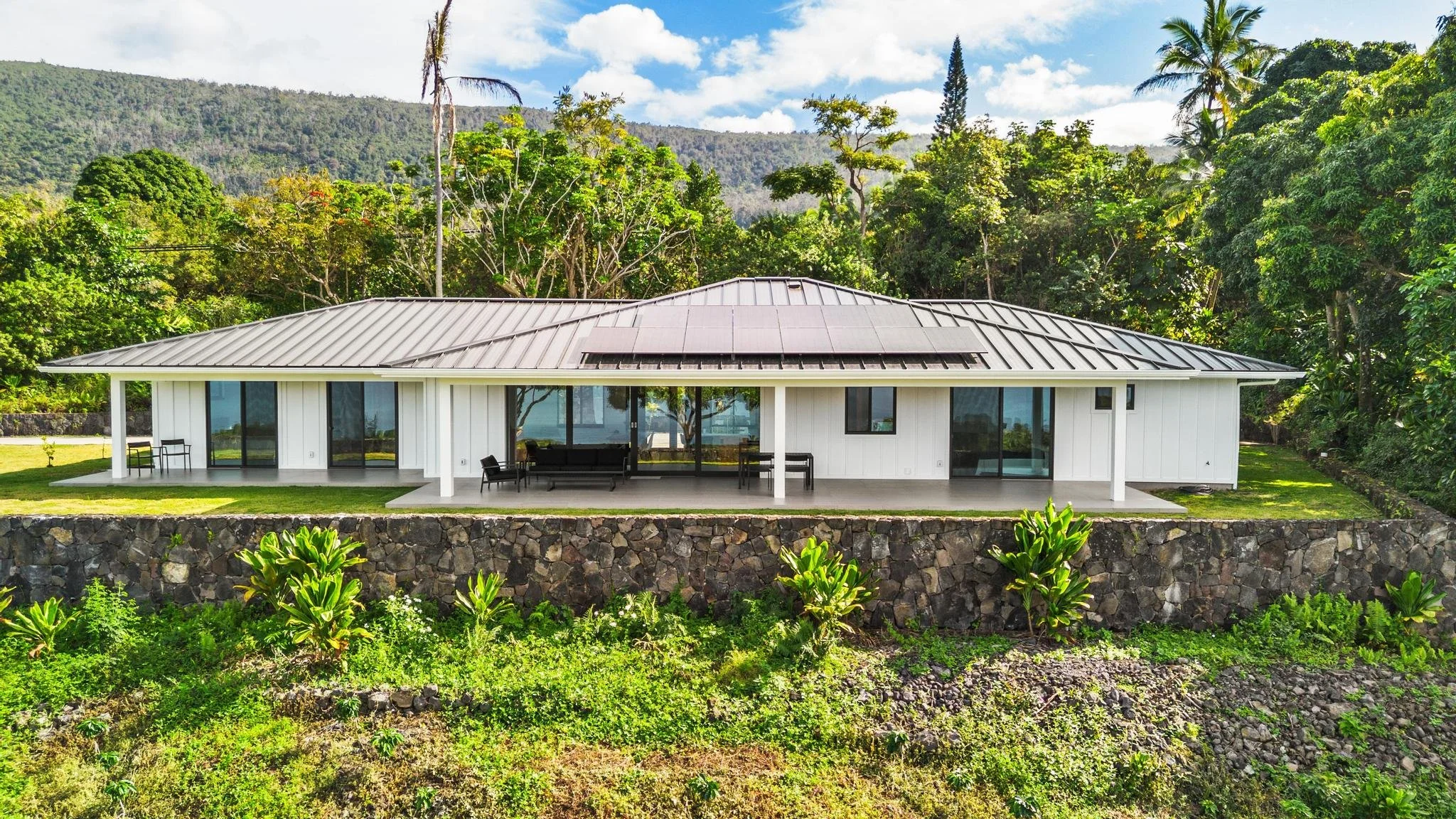
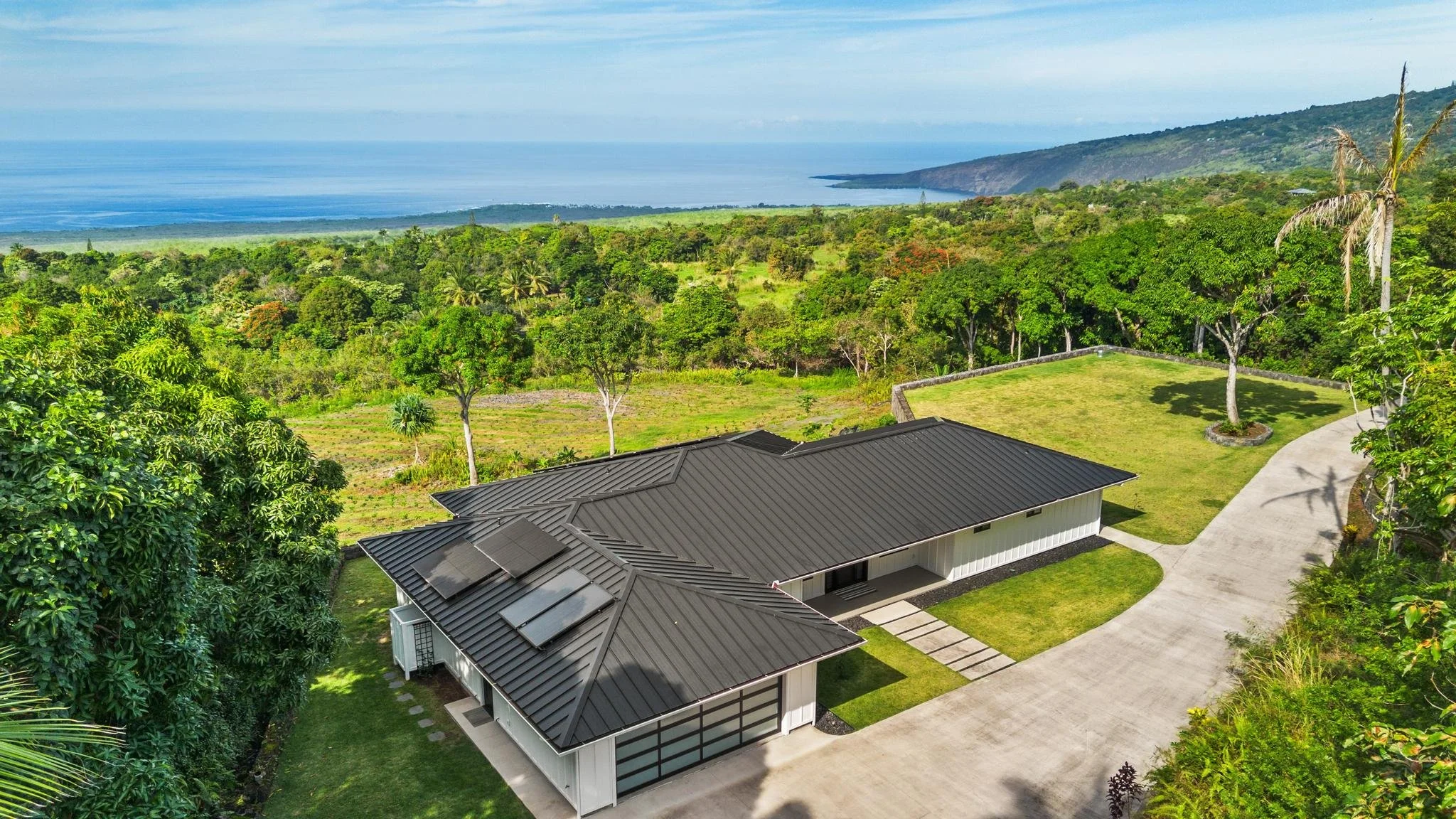
When our clients acquired a five-acre parcel overlooking Kealakekua bay in Captain Cook Hawai’i, they invited us to join them at the outset of designing their permanent residence. Working alongside the construction team from early planning through execution, we provided design guidance to ensure each architectural decision honored both the setting and the clients’ vision. It was a privilege.
Some projects begin with finishes or floor plans. This one began with land — with wind patterns, lava fields, intensive vegetation and the shifting light over water. It needed to be felt in person to know what it was to become.
Occasionally we divide our work between the Pacific Northwest and Hawai‘i, and while the landscapes differ, the philosophy remains the same — design rooted in place, guided by light, and built to endure.
What is felt and seen first….
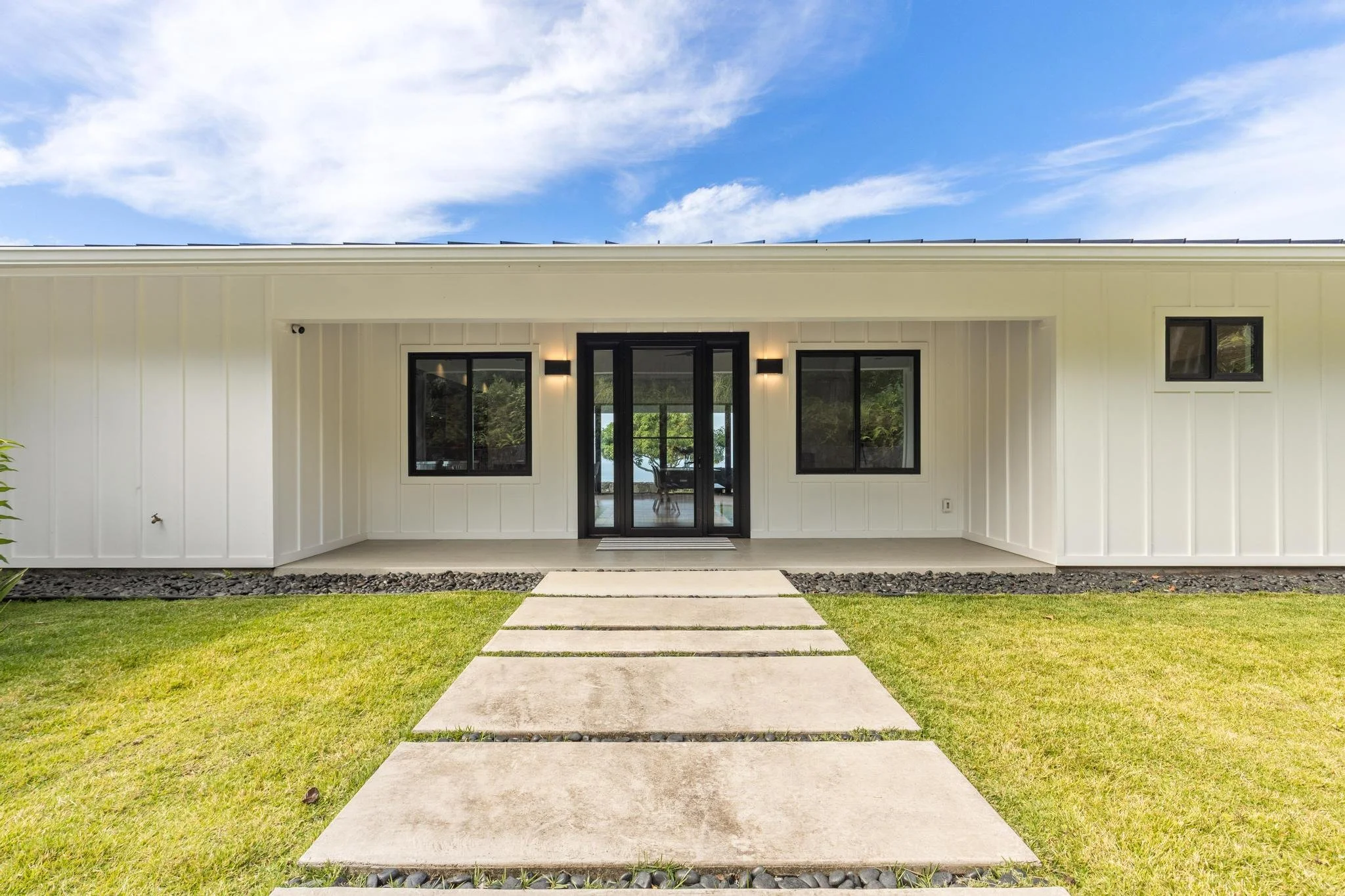
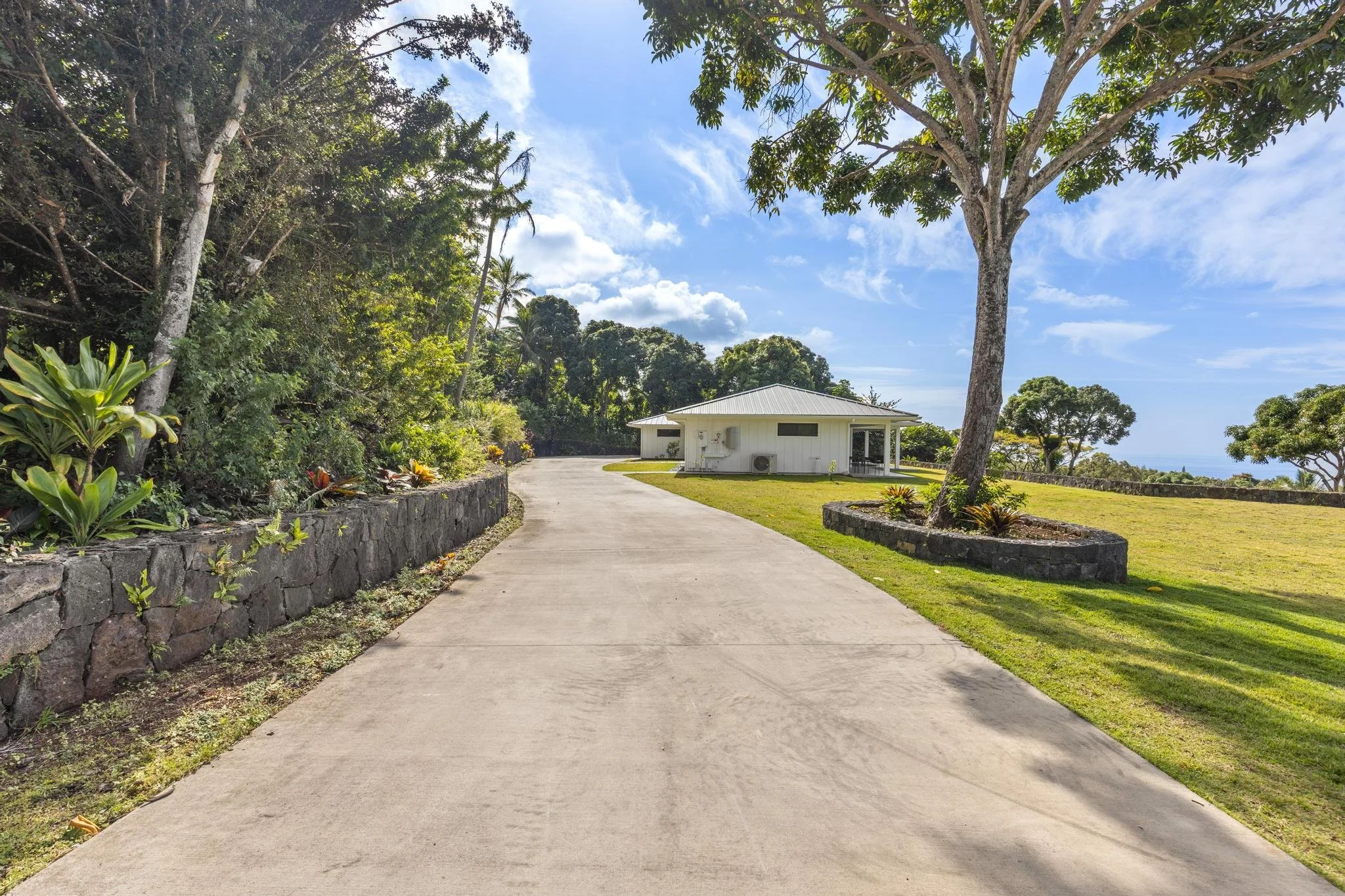
Oversized concrete pavers guide you to the front door, each step deliberate and grounded. The house presents itself with quiet clarity: crisp white board-and-batten siding, a black standing-seam metal roof, and dark-framed windows, accented only by understated black lighting. The entrance is spare, composed, and calm — a pause before stepping inside.
From the beginning, the design question was “What should this house look like?” and “How should it feel to live here?”
Kona’s landscape does not ask for elaborate decoration. It asks for restraint.
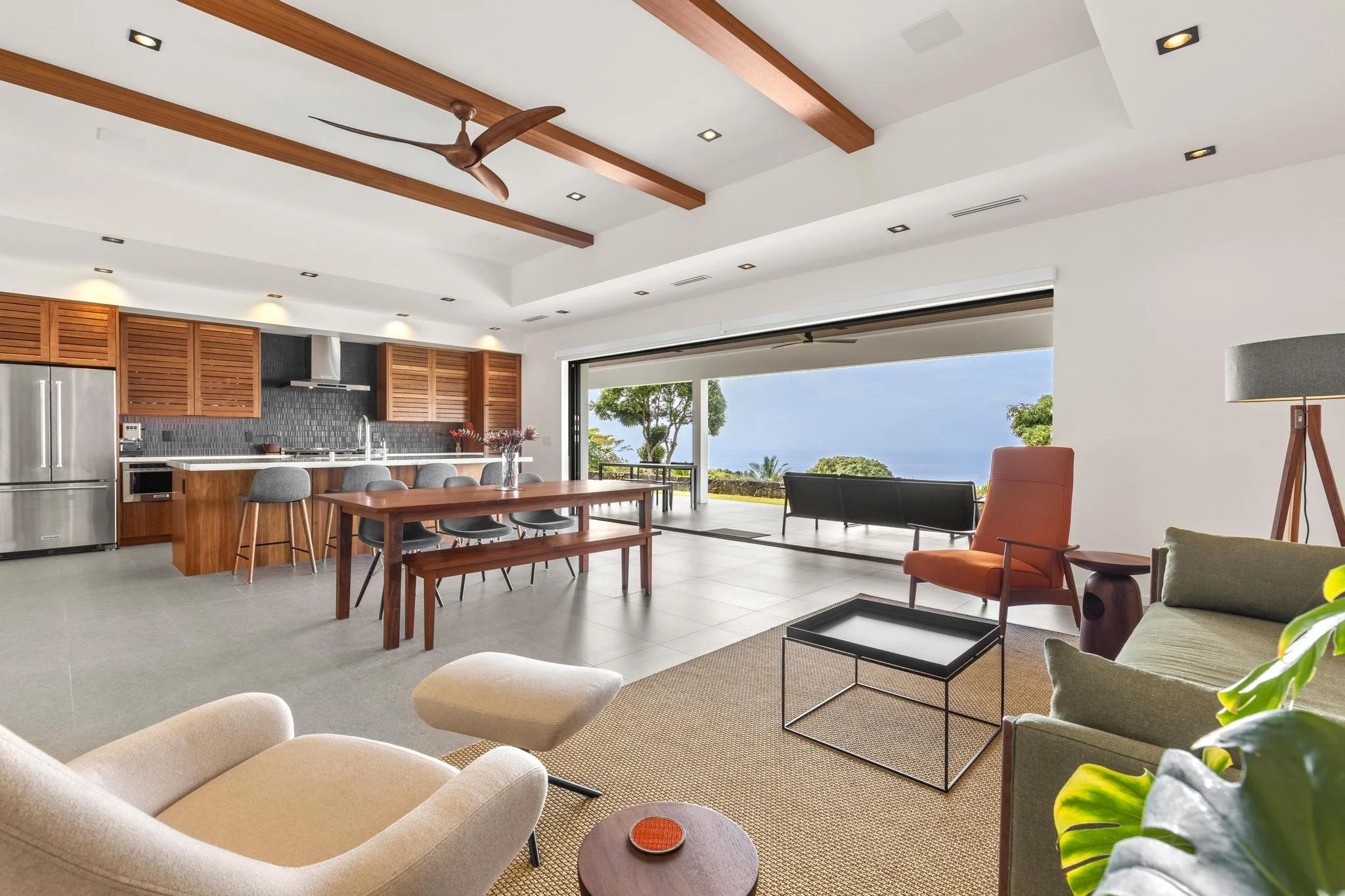
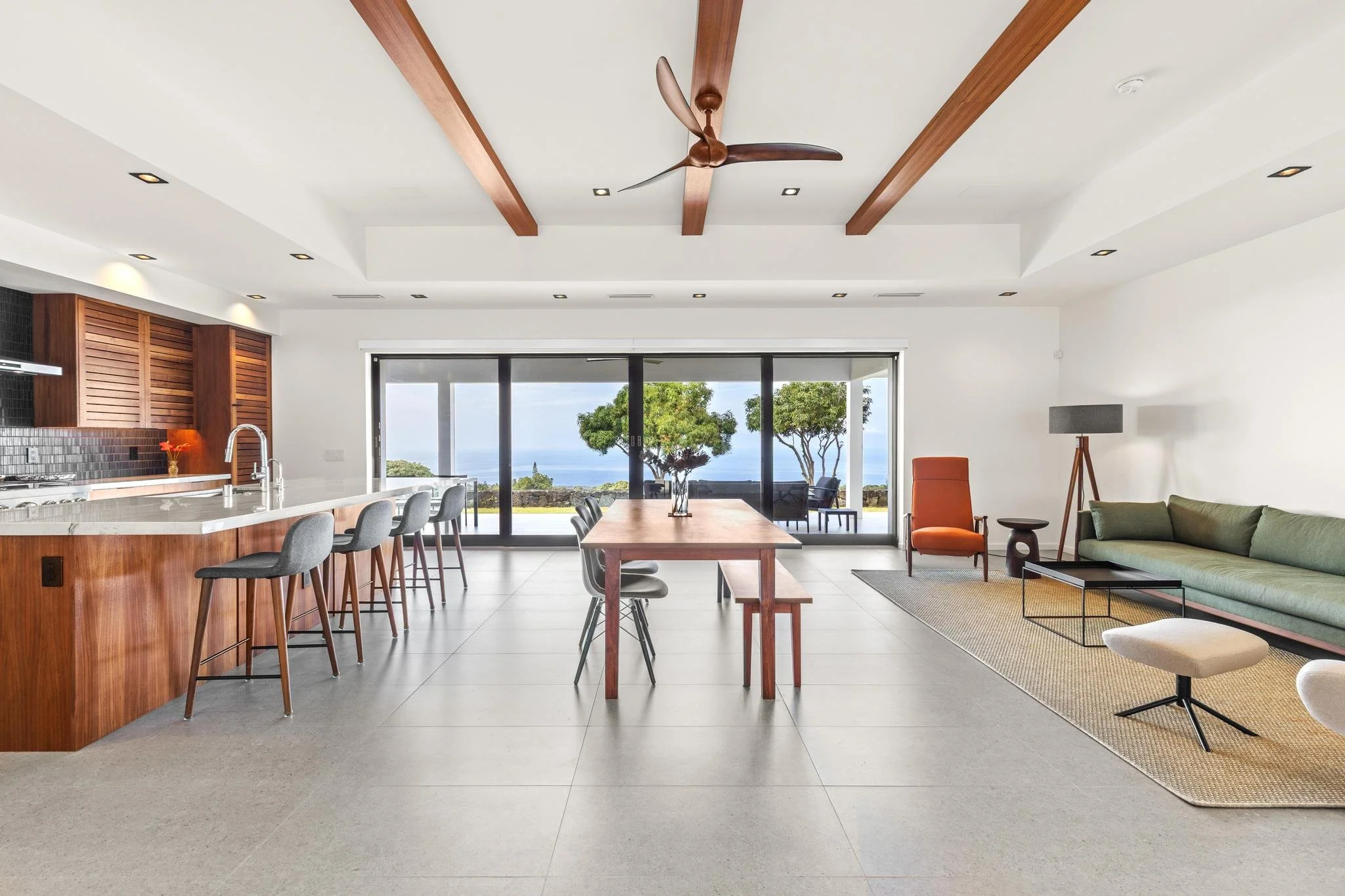
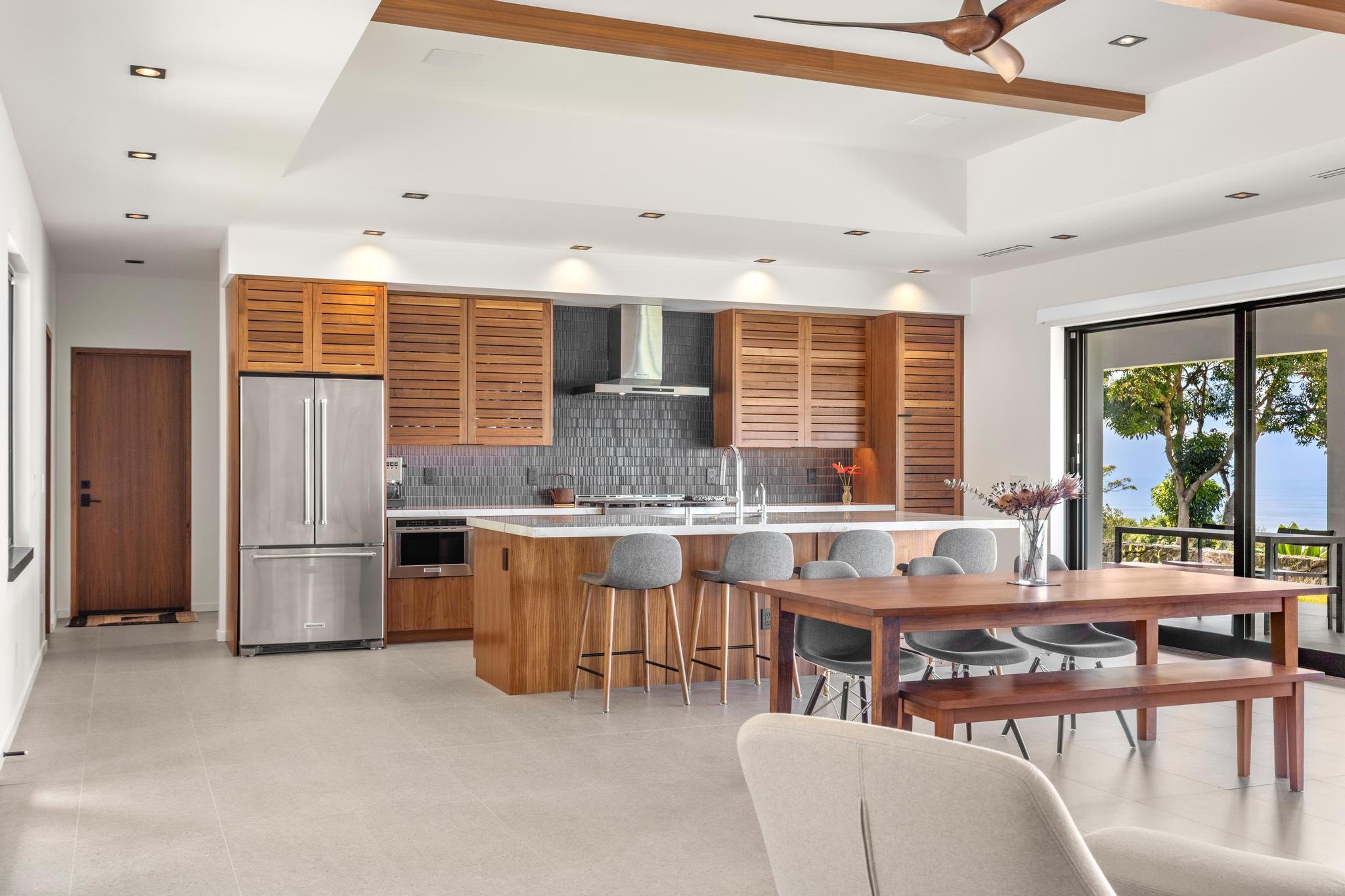
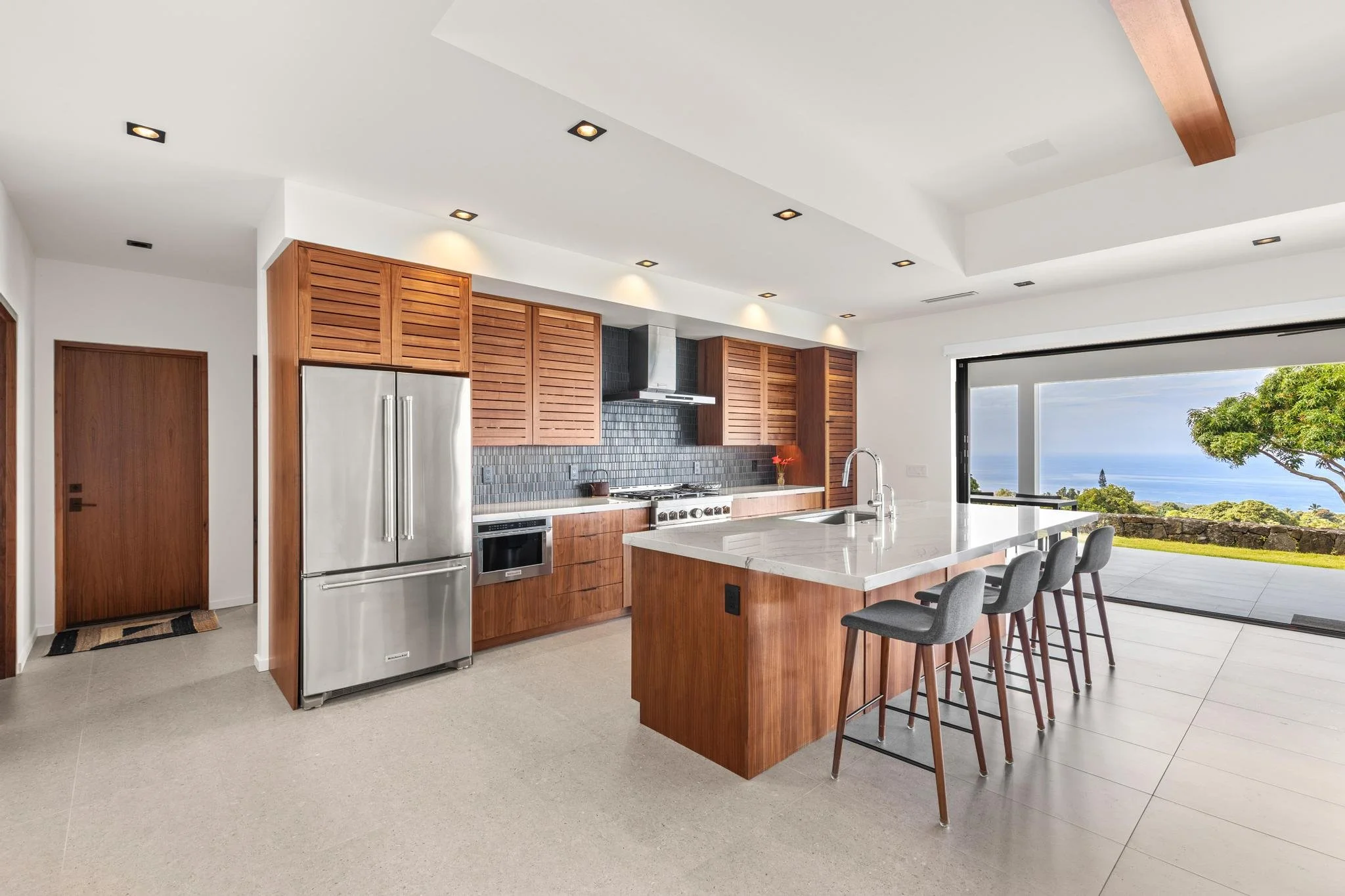
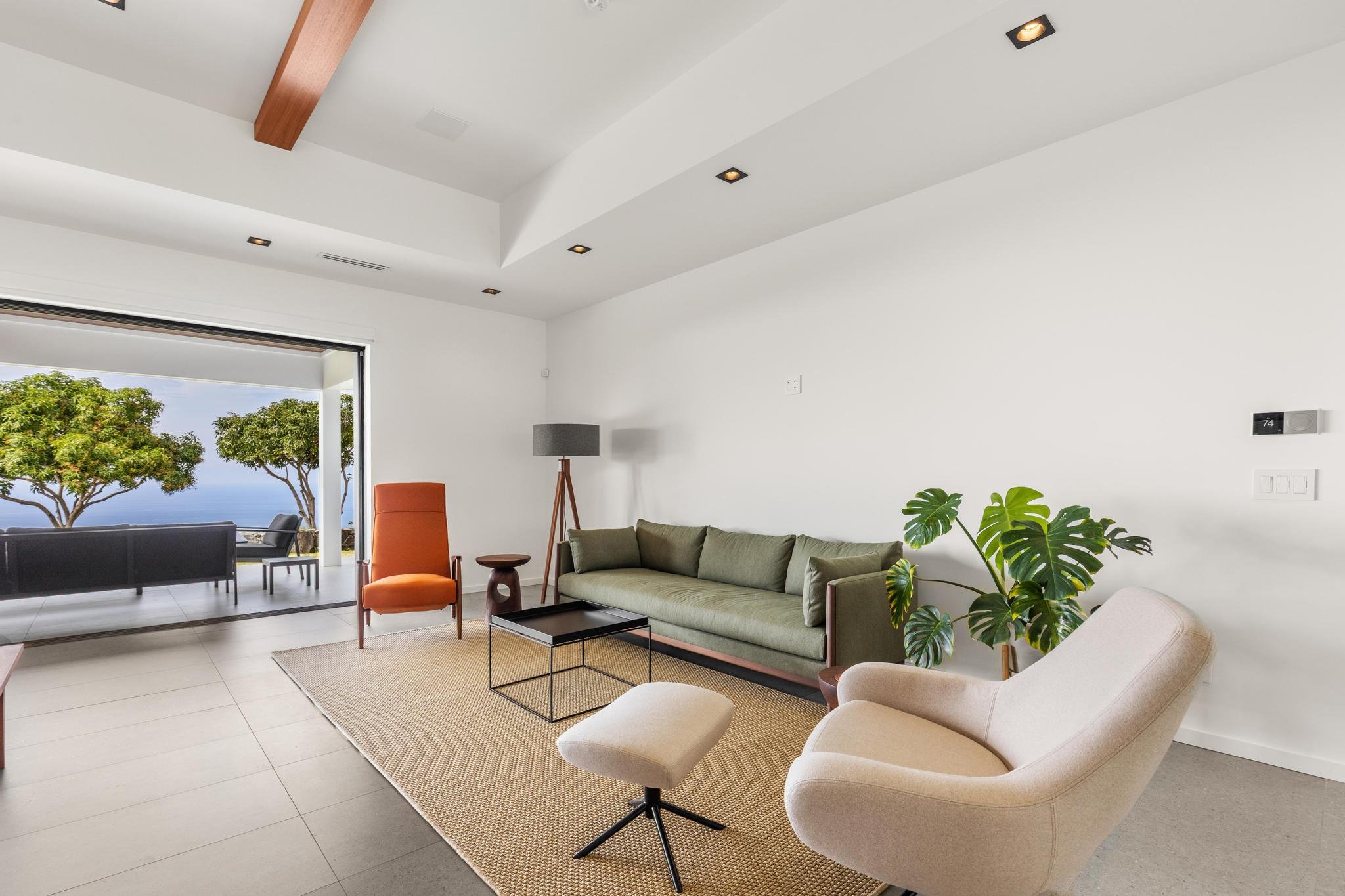
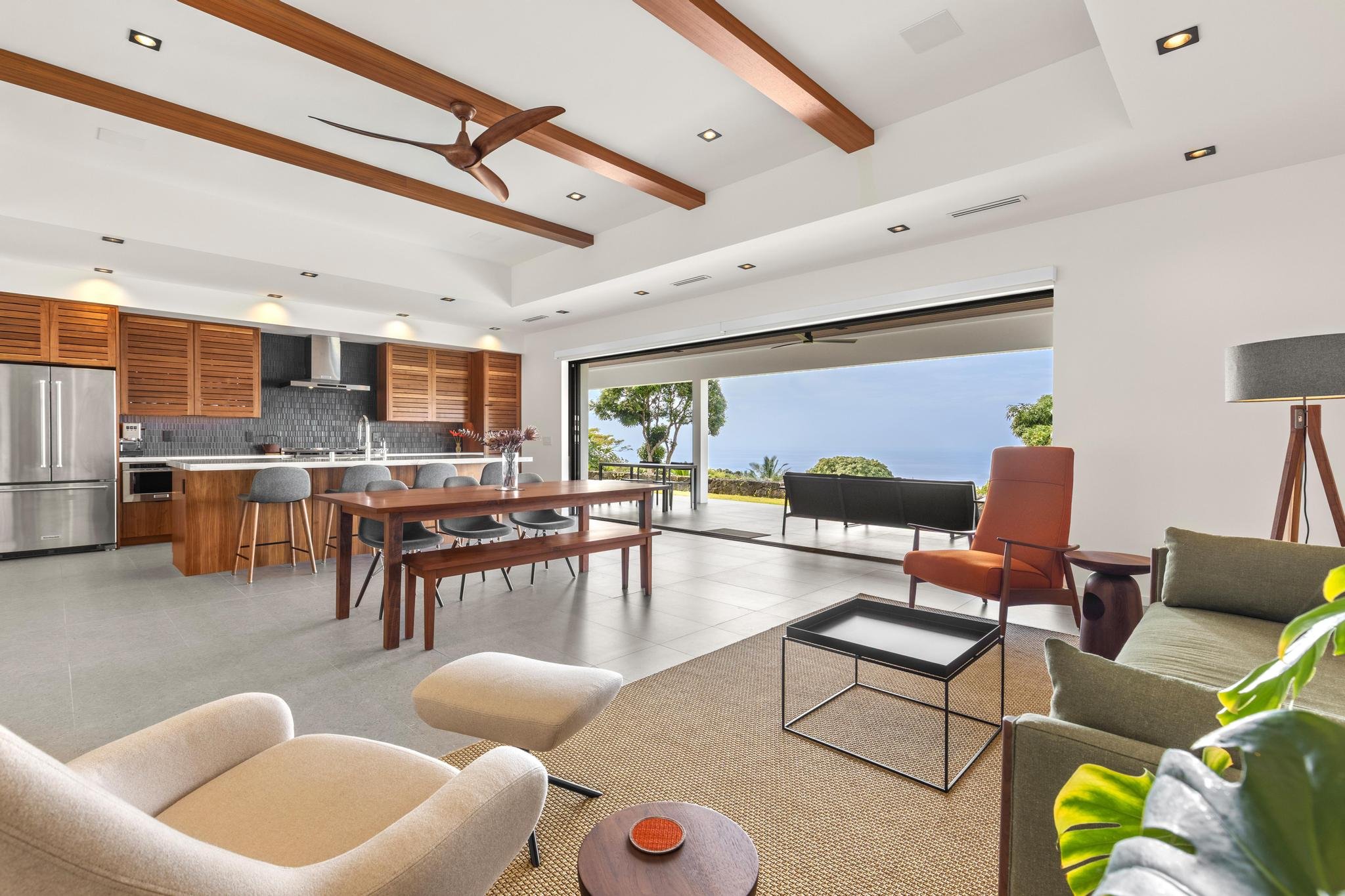
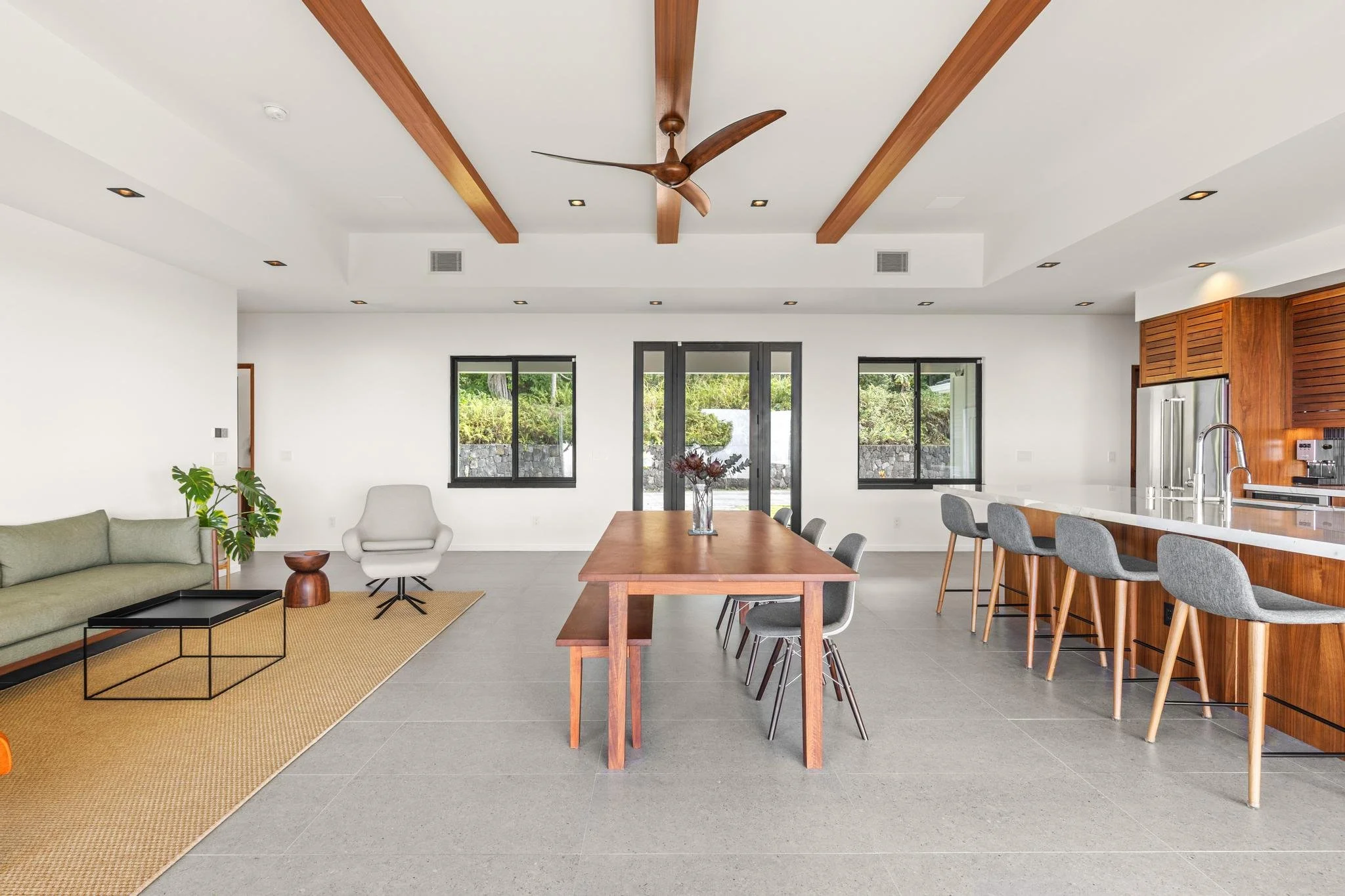
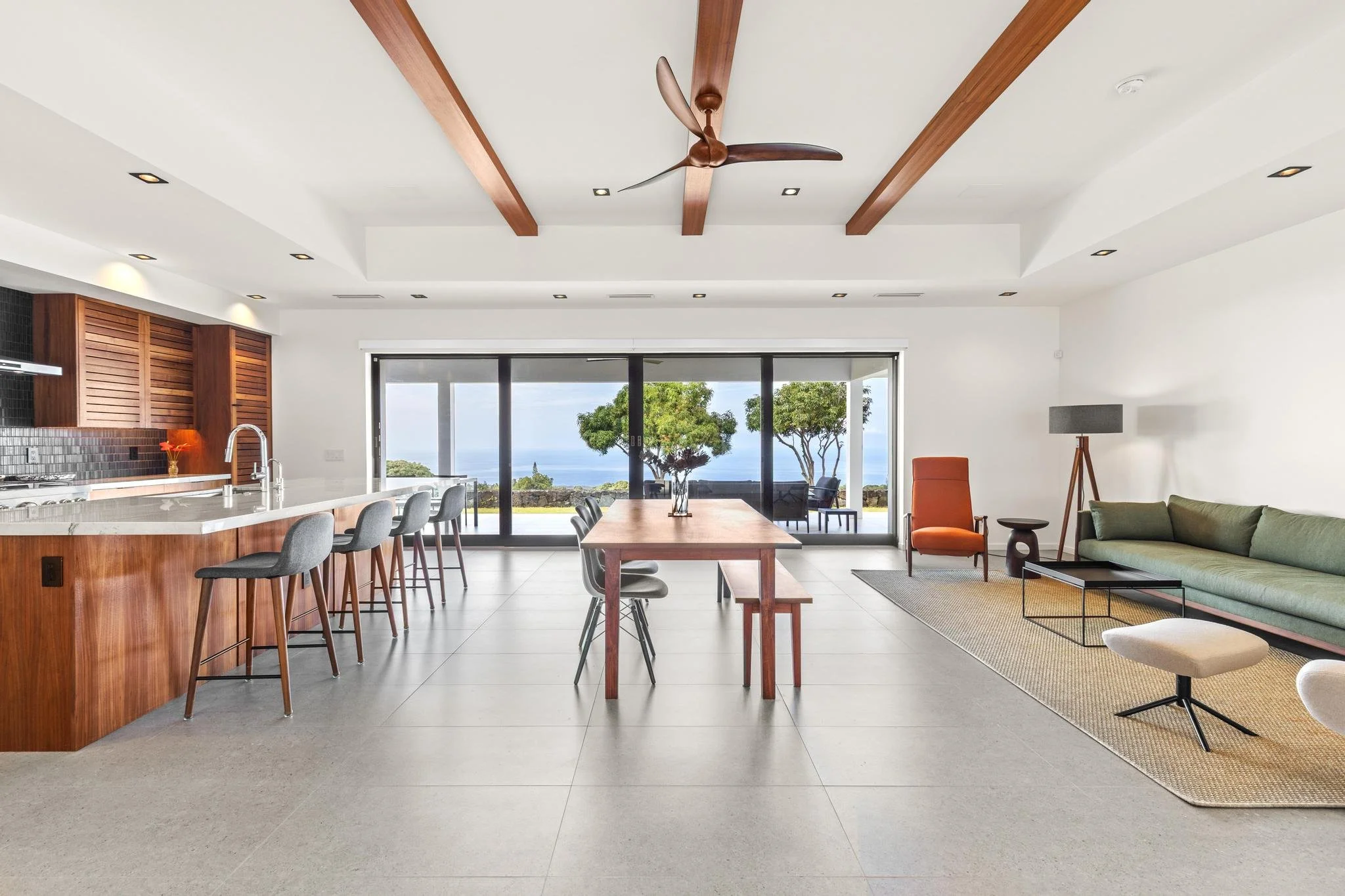
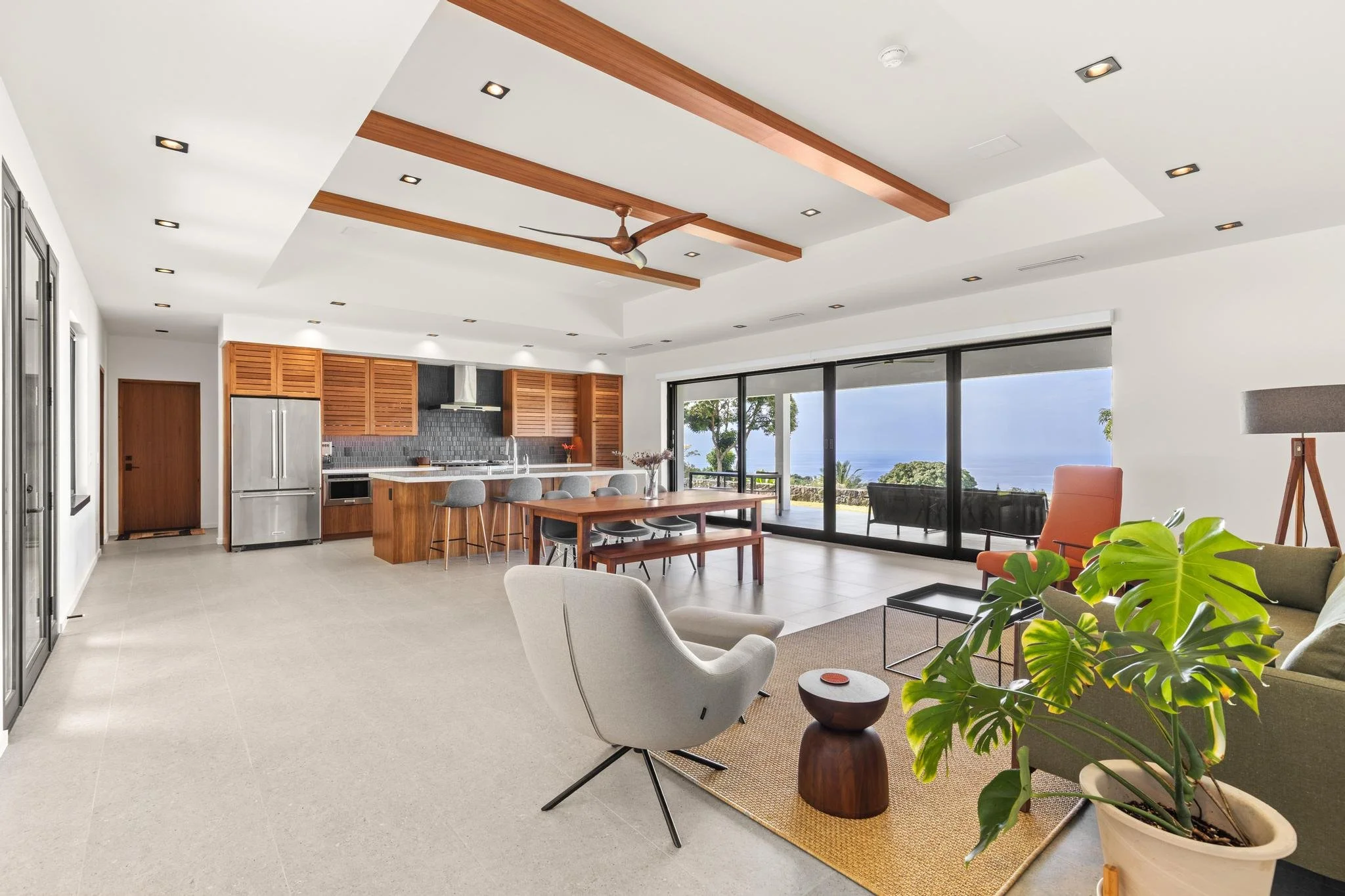
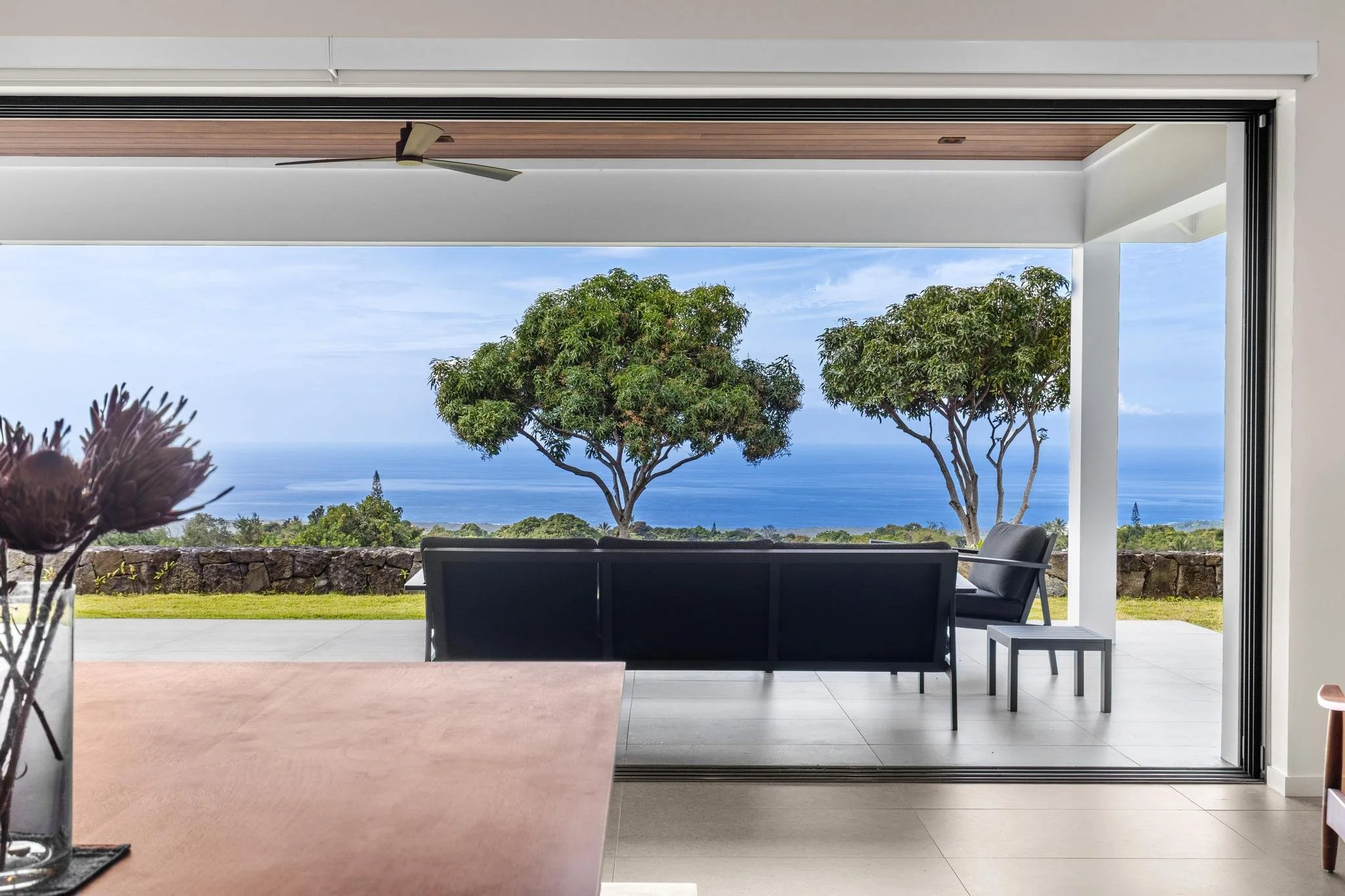
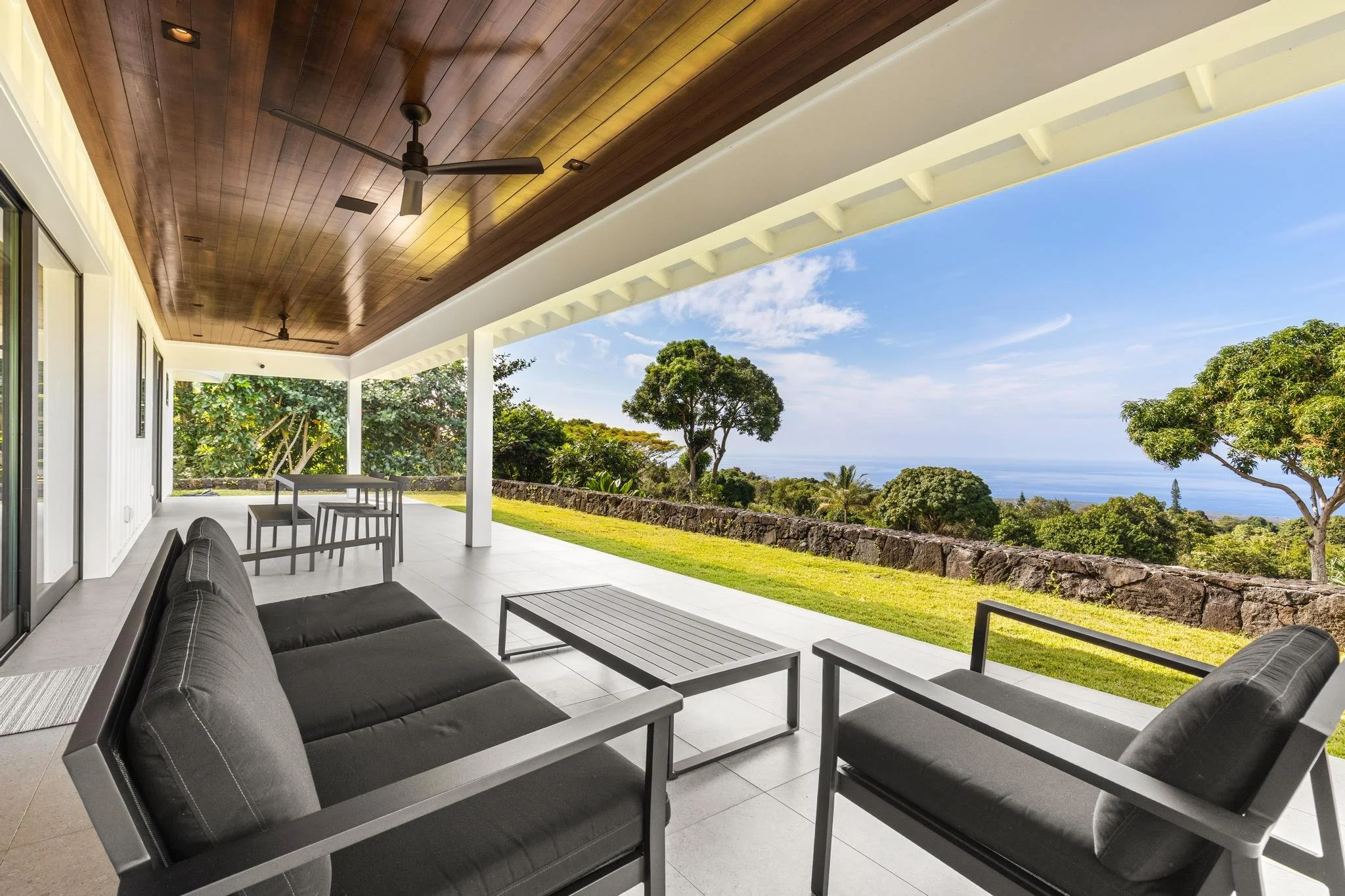
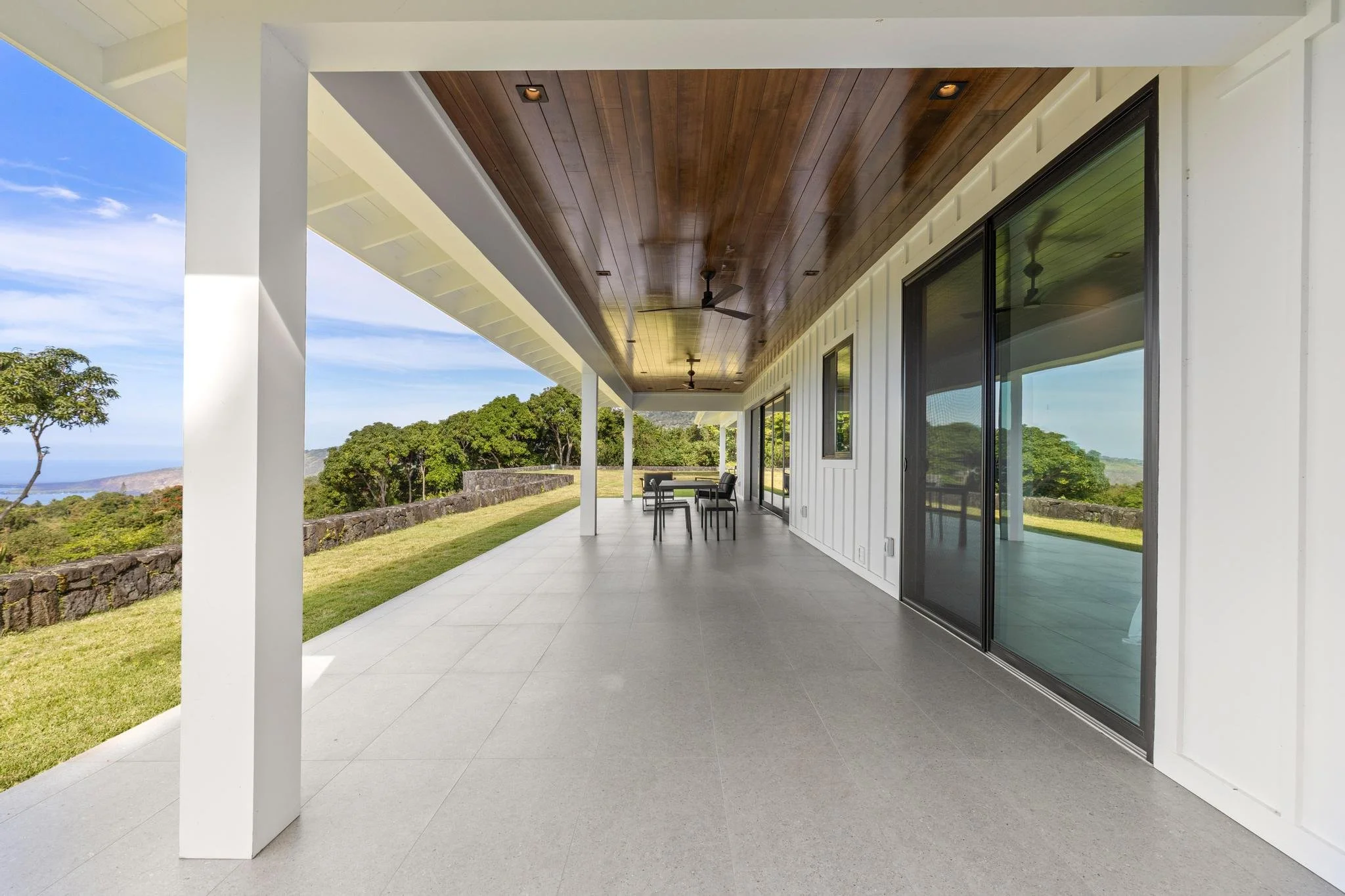
We worked with a few natural textures that could hold their own against black lava, green landscape and brilliant blue water — white walls, warm woods, sand colored large format porcelain tile that extends throughout the home from the front porch to the West facing lanai. This outdoor space, with multi slide doors that pocket into the wall at each end of the opening, allows for fresh breeze, and beautiful coral hued sunset suppers outside.
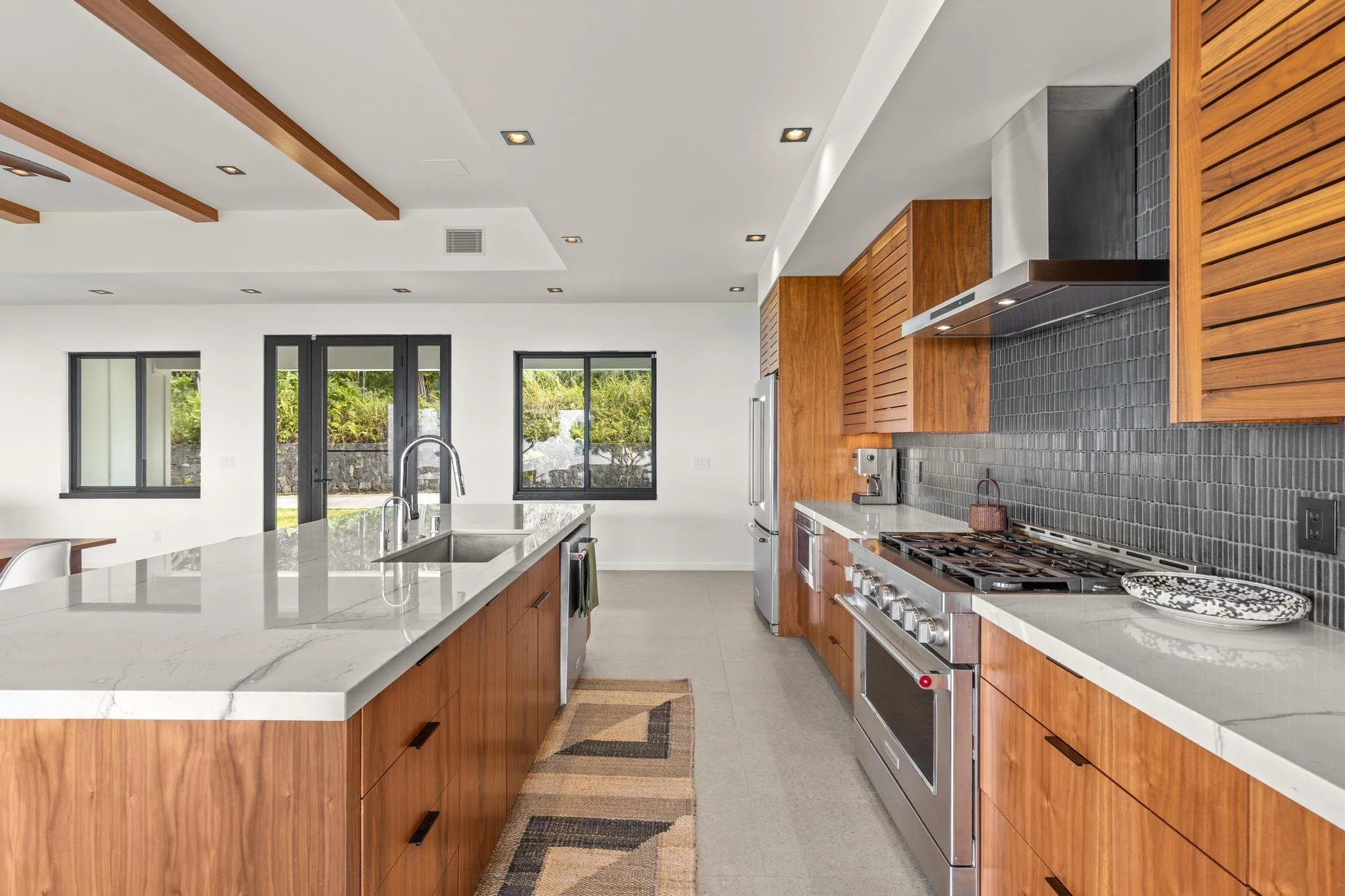
Windows that breathe, they were positioned not simply for views, but for rhythm: abundant light in the kitchen, long shadows across the living space, along with the soft dimming that signals the end of the day.
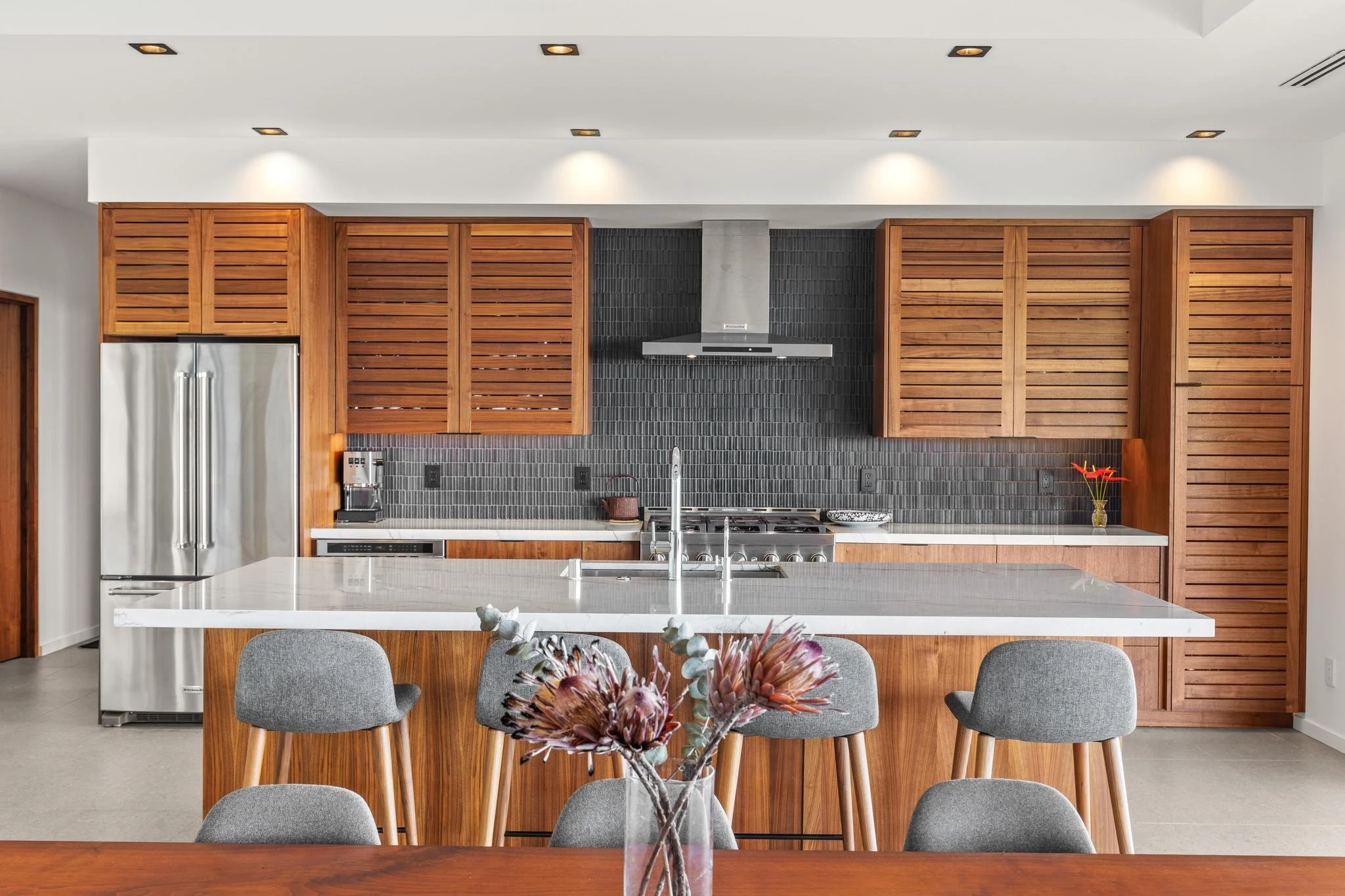
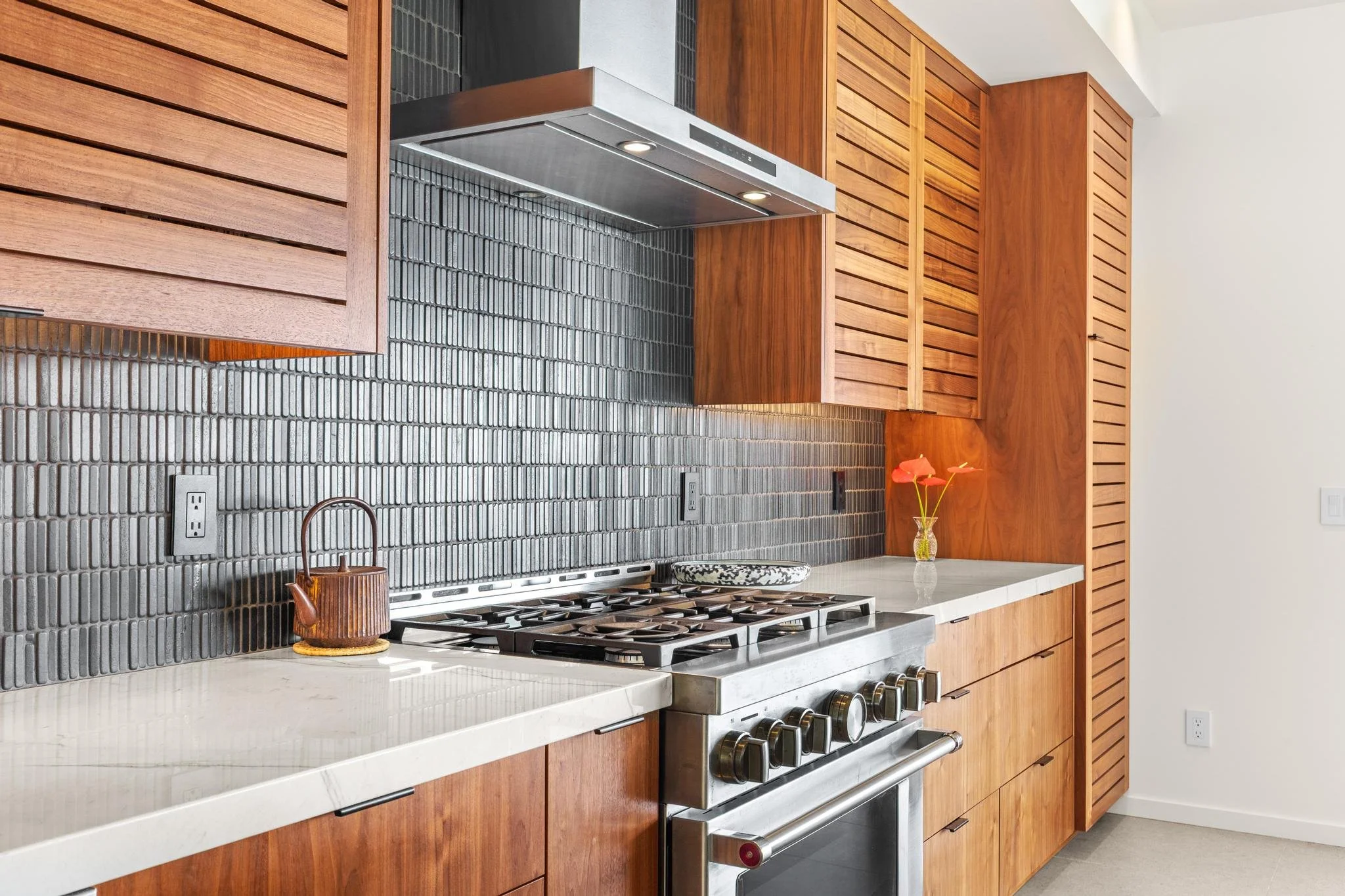
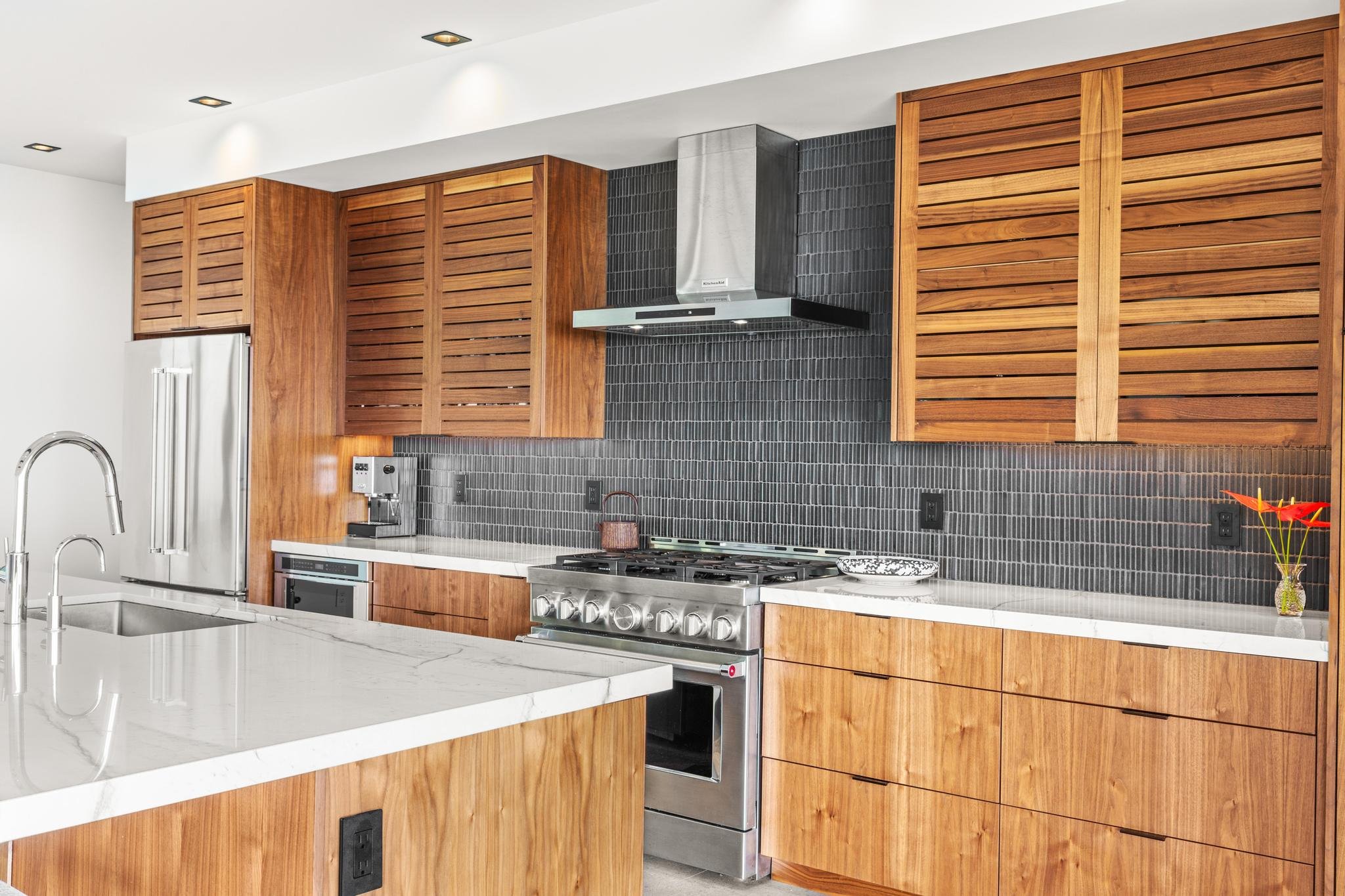
Walnut kitchen cabinetry with slatted upper doors and solid lower cabinets are combined with Ann Sacks - tumbled Nero Marquina marble - a smoky black, evoking another connection to the natural deep tones in the lava rock wall outside of the home.
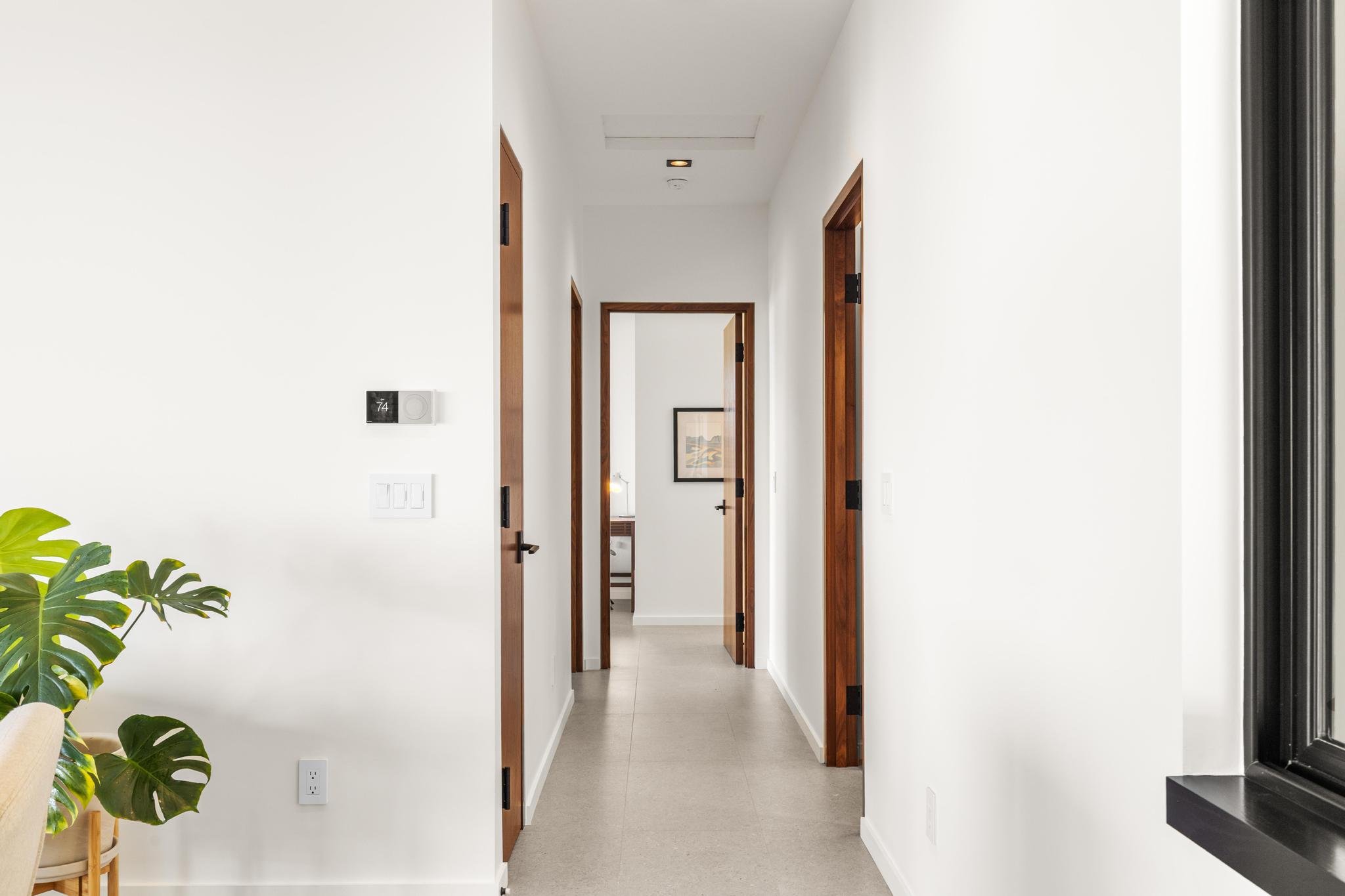
Down the hall, the home shifts tone.
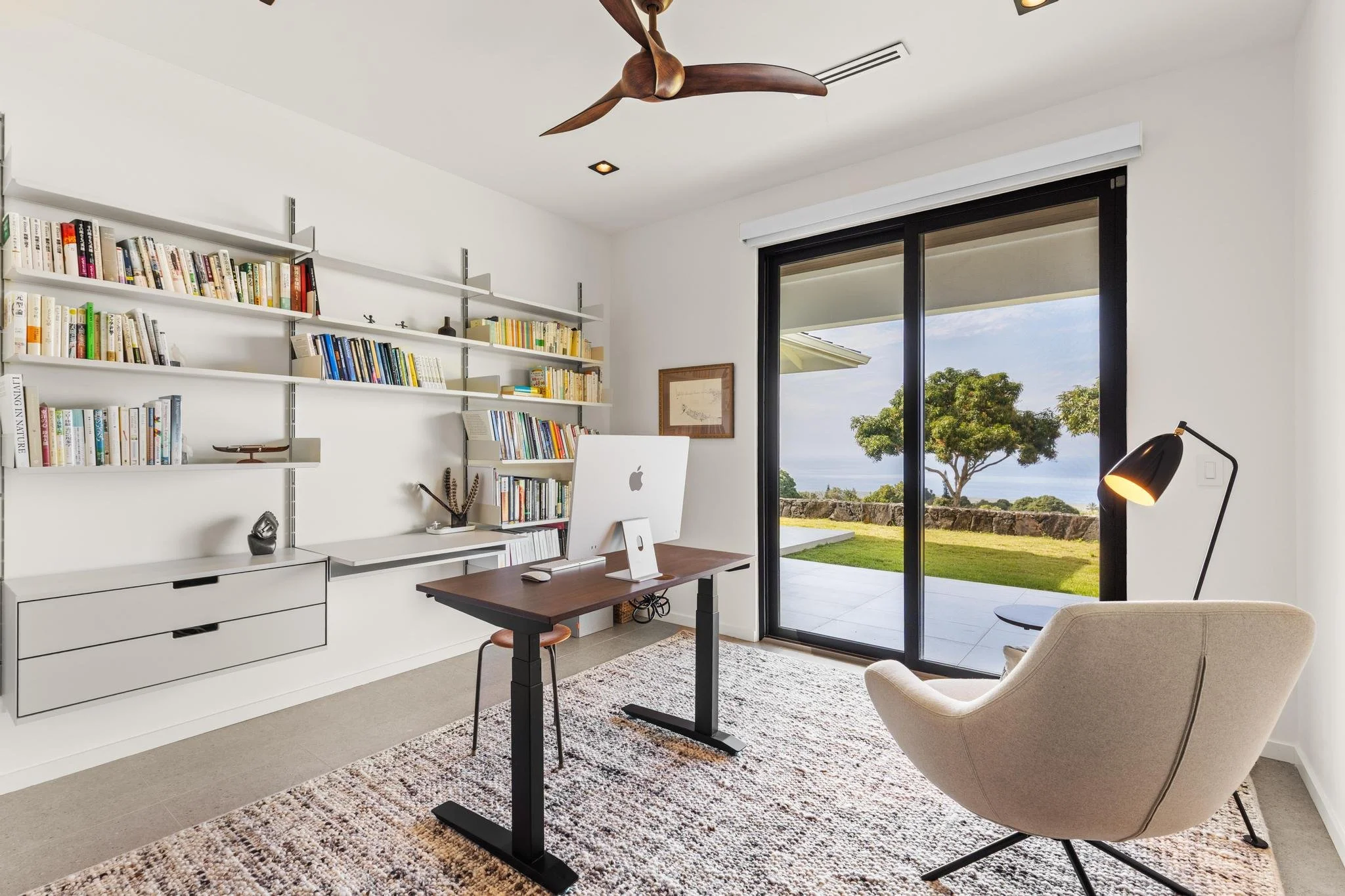
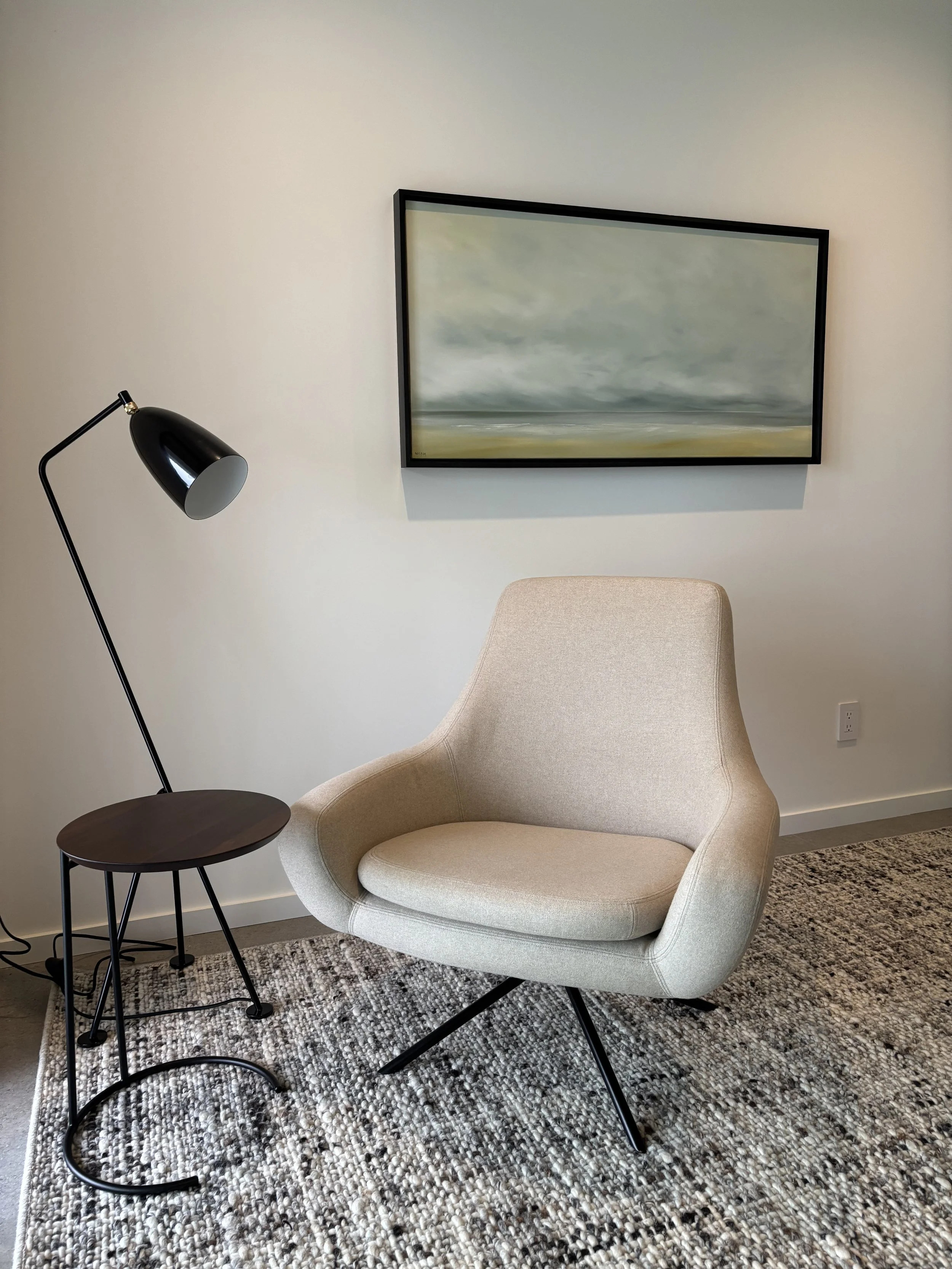
The office sits just before a guest suite — a space designed for meaningful conversation and connection. The Dieter Rams Vitsoe shelving system keeps the backdrop precise for online sessions, while furnishings from Design Within Reach and a rug from Ernesto bring warmth and texture. An oil painting hung on the wall was recommended by us, to compliment the calmness and views from this workspace towards the bay. The Pacific Ocean in Manzanita, Oregon adds depth and story.
At the end, the ensuite bedroom door closes gently, offering retreat. From the hallway, the sequence feels layered — work, rest and pause — each space revealed in turn.
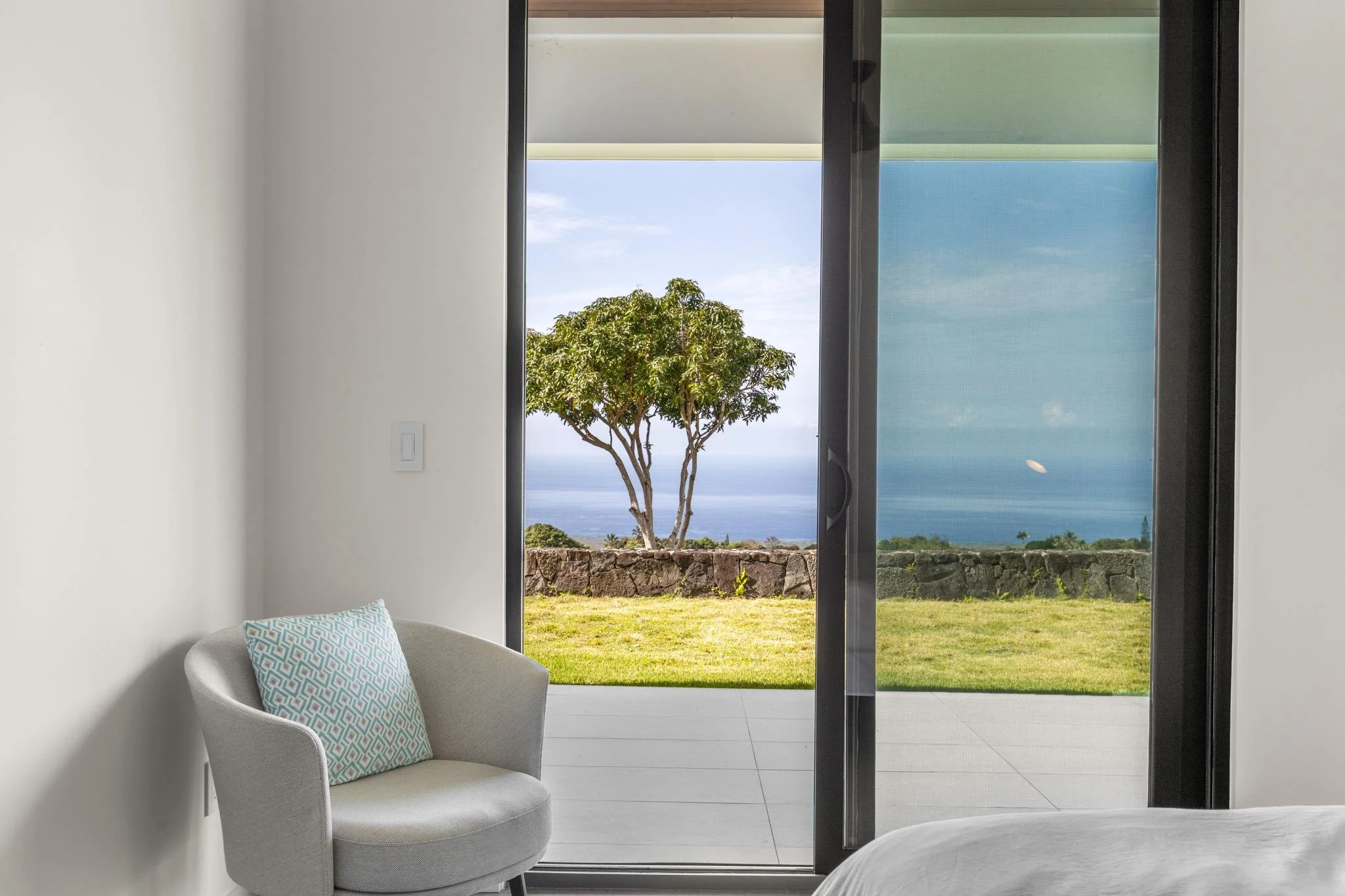
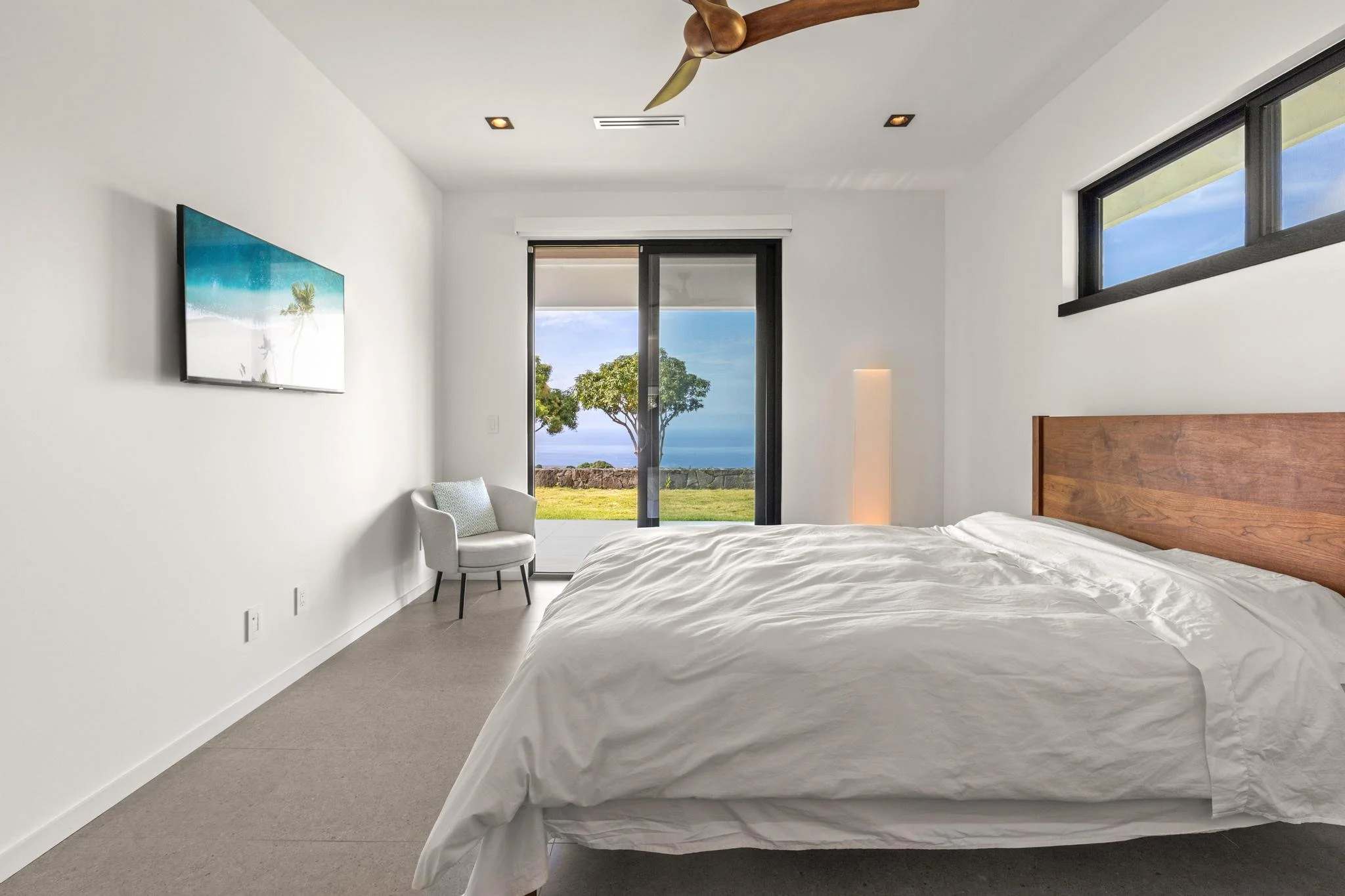
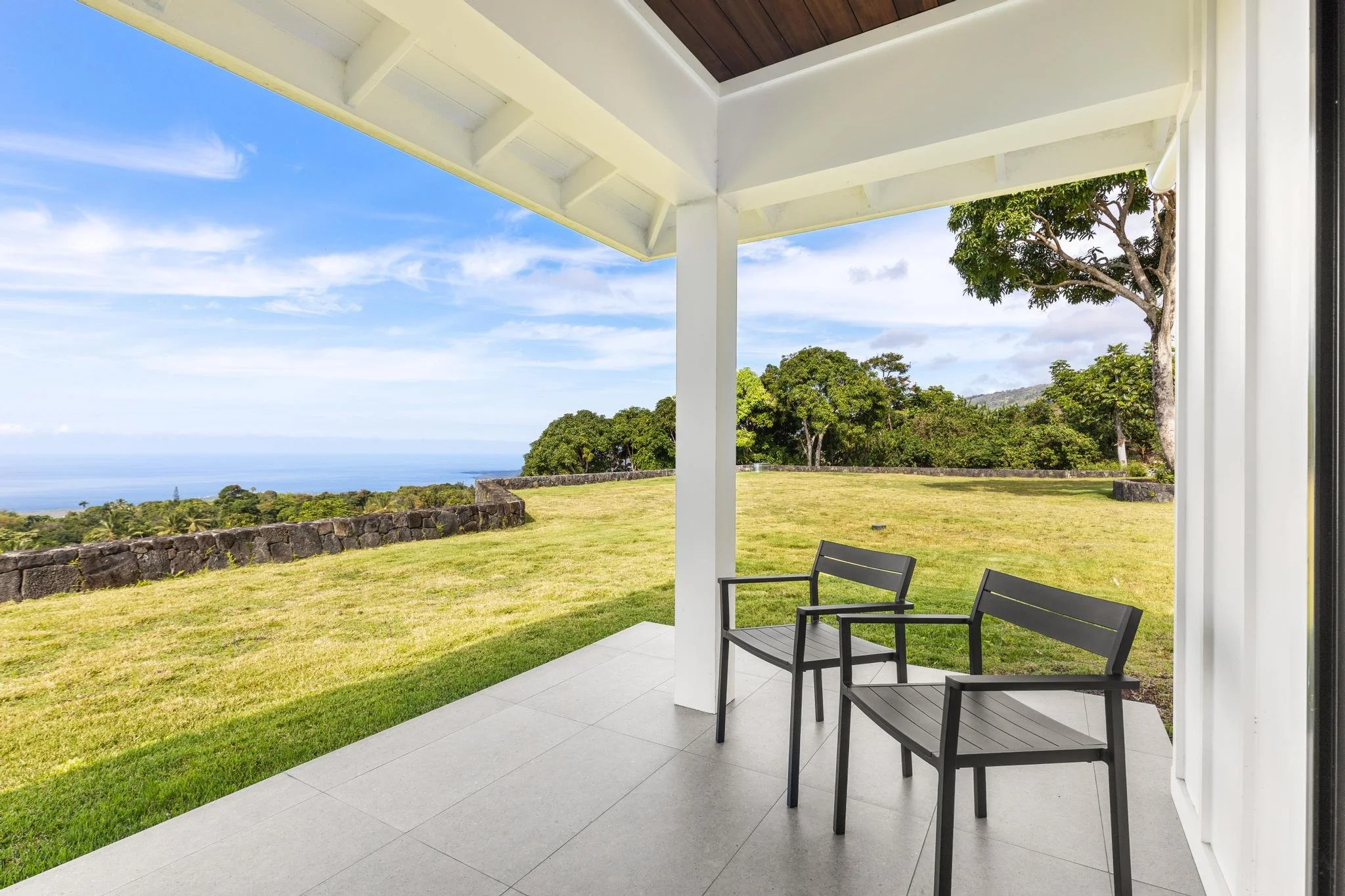
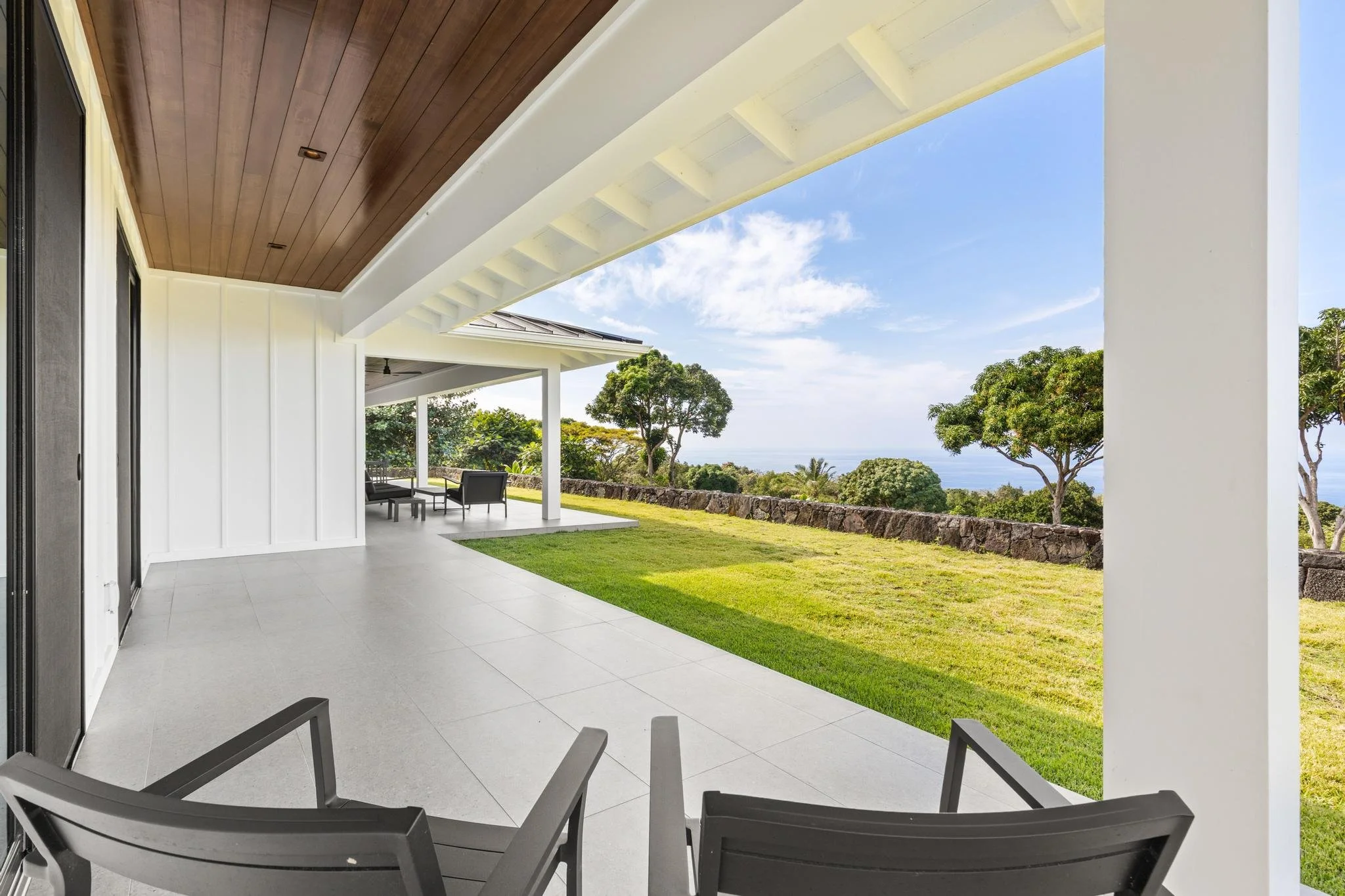
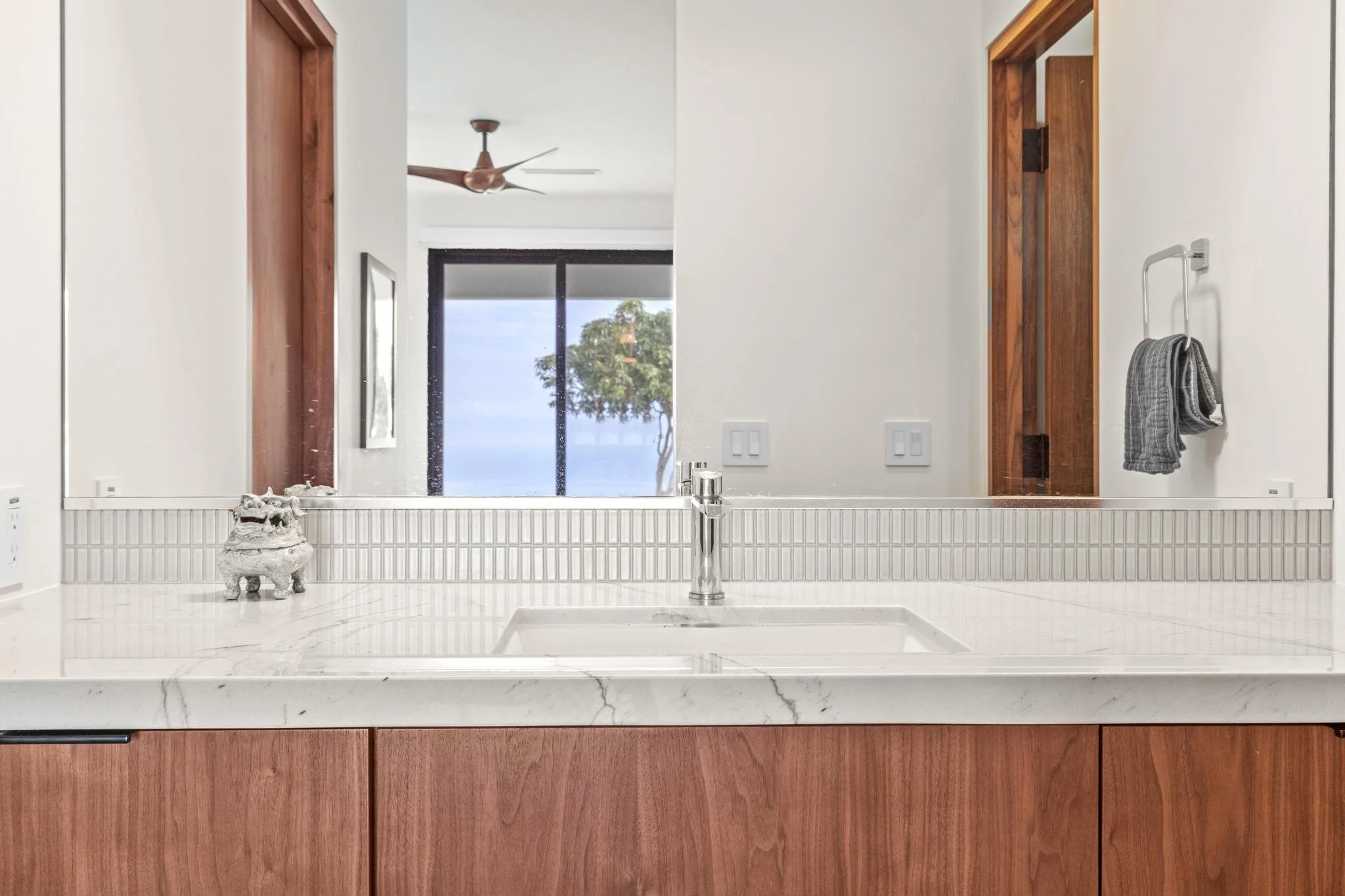
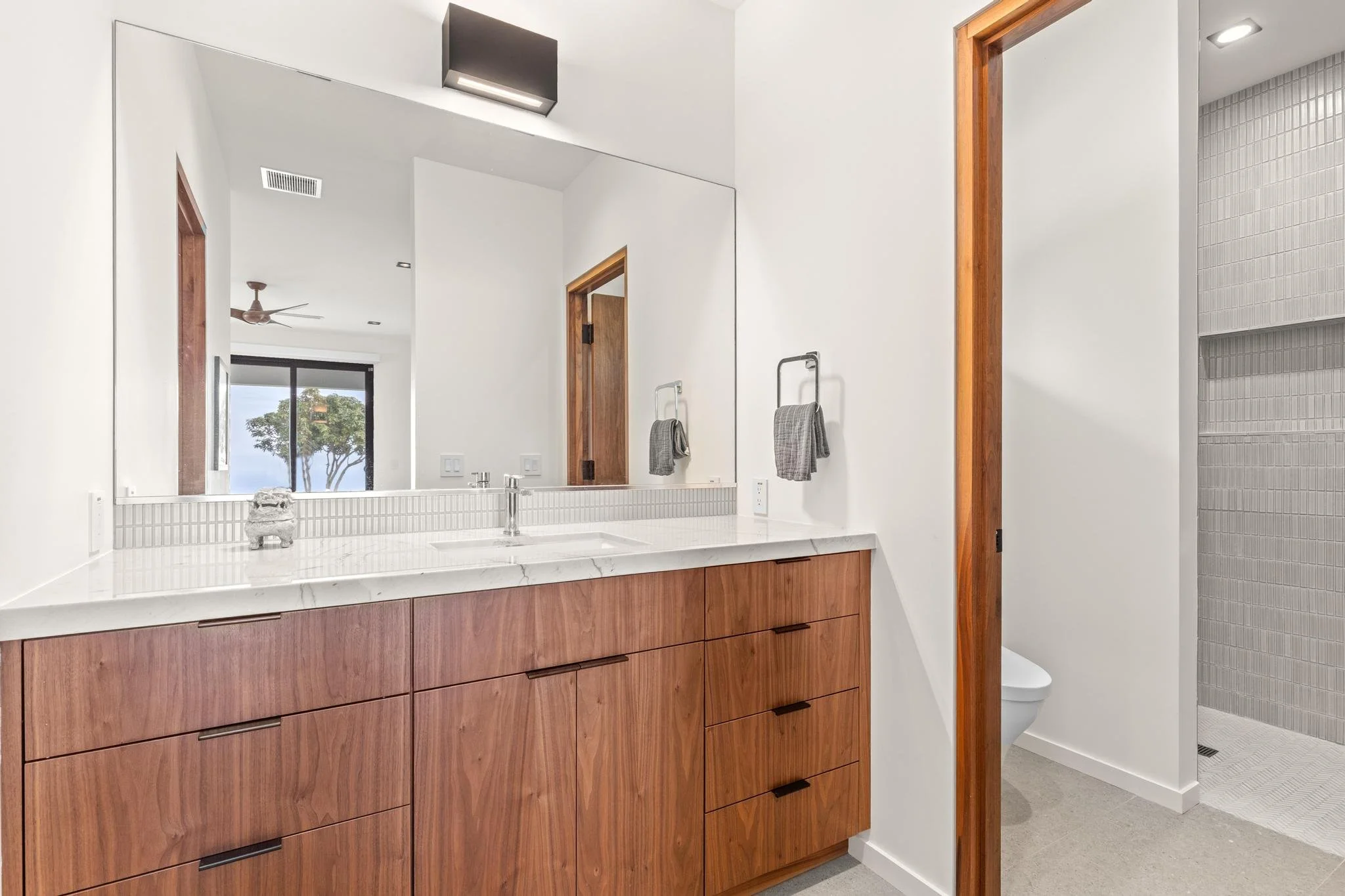
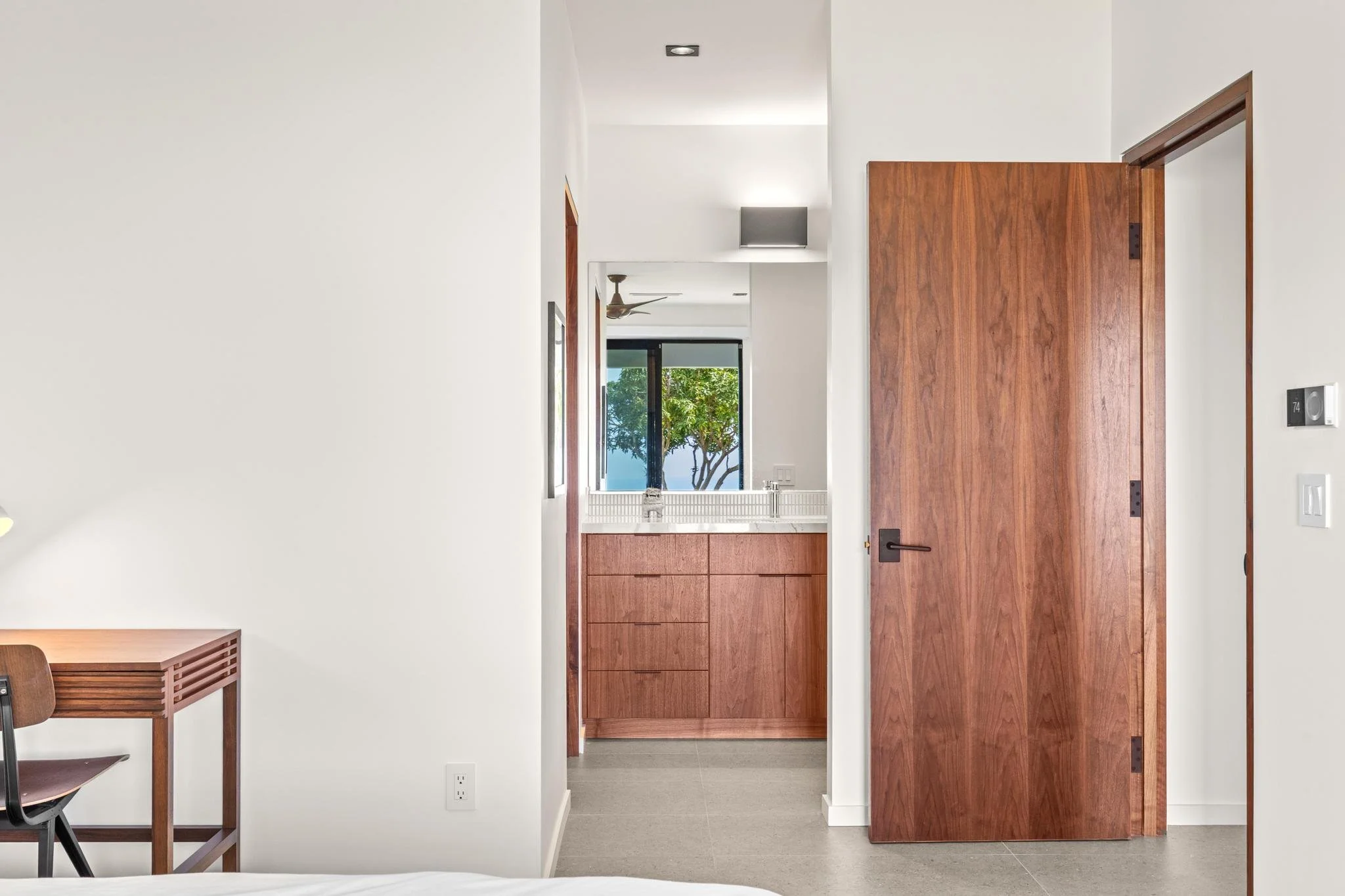
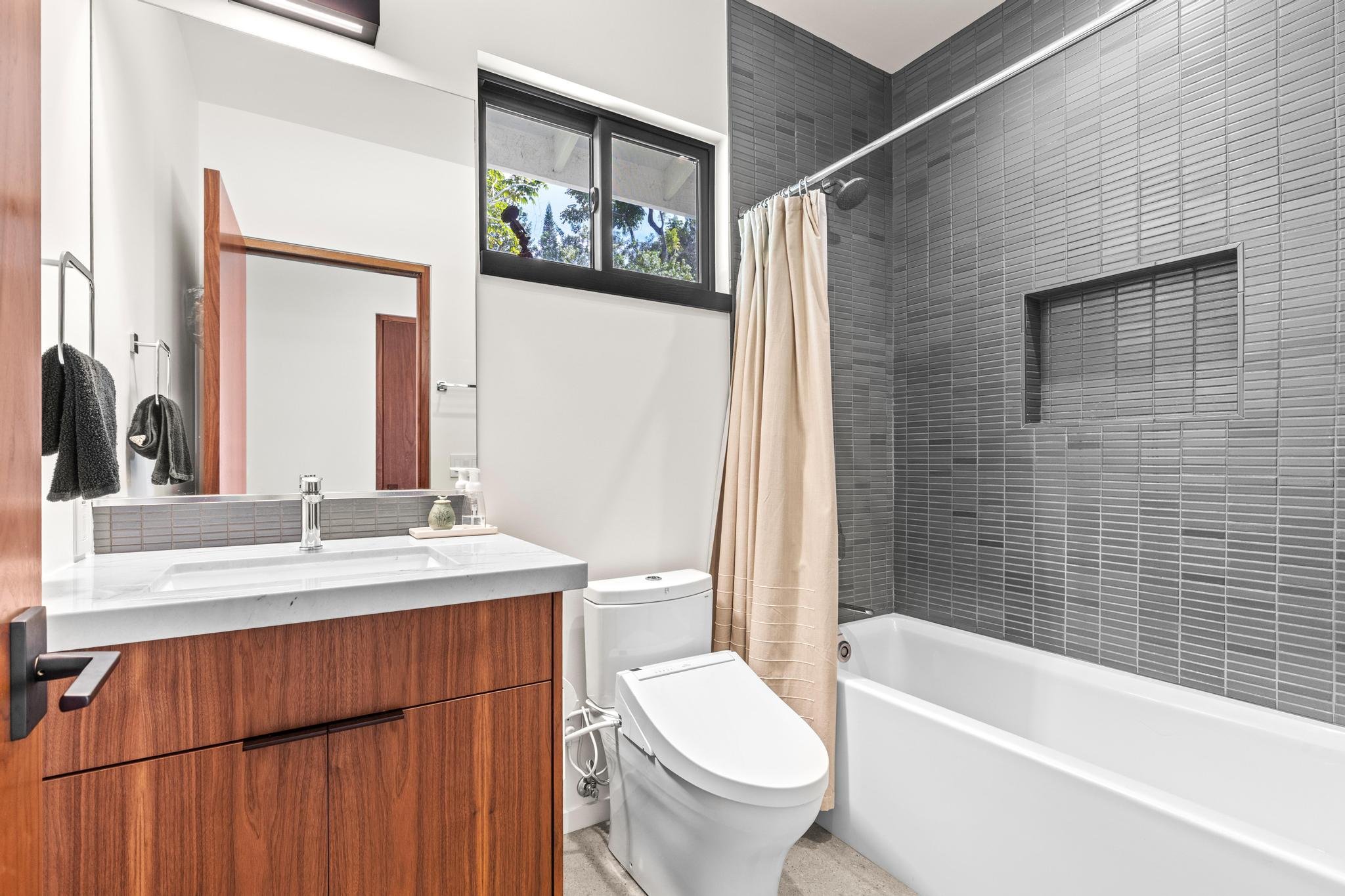
The primary bedroom suite, located on the other wing of the home, is a sanctuary of quiet proportion.
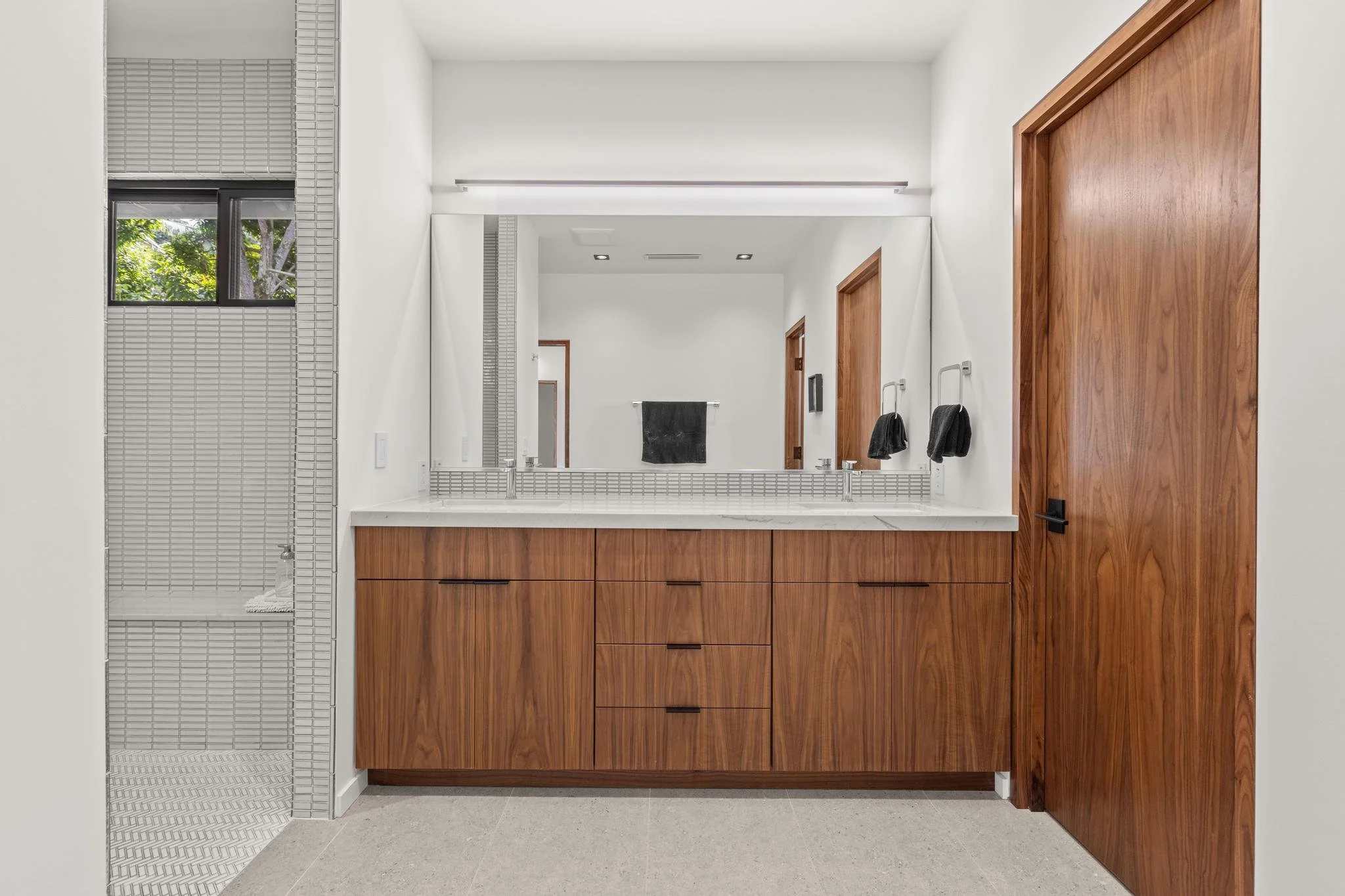
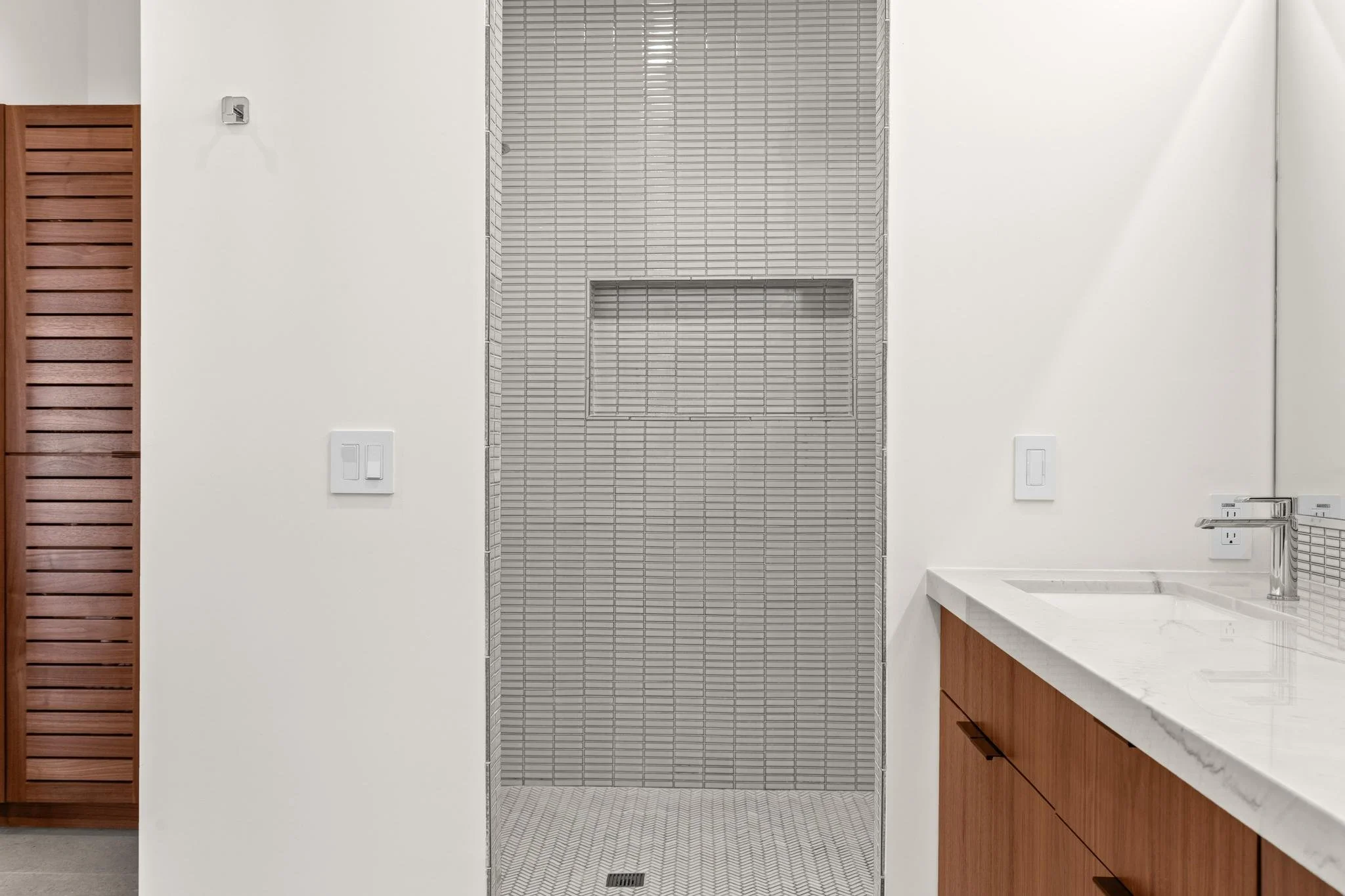
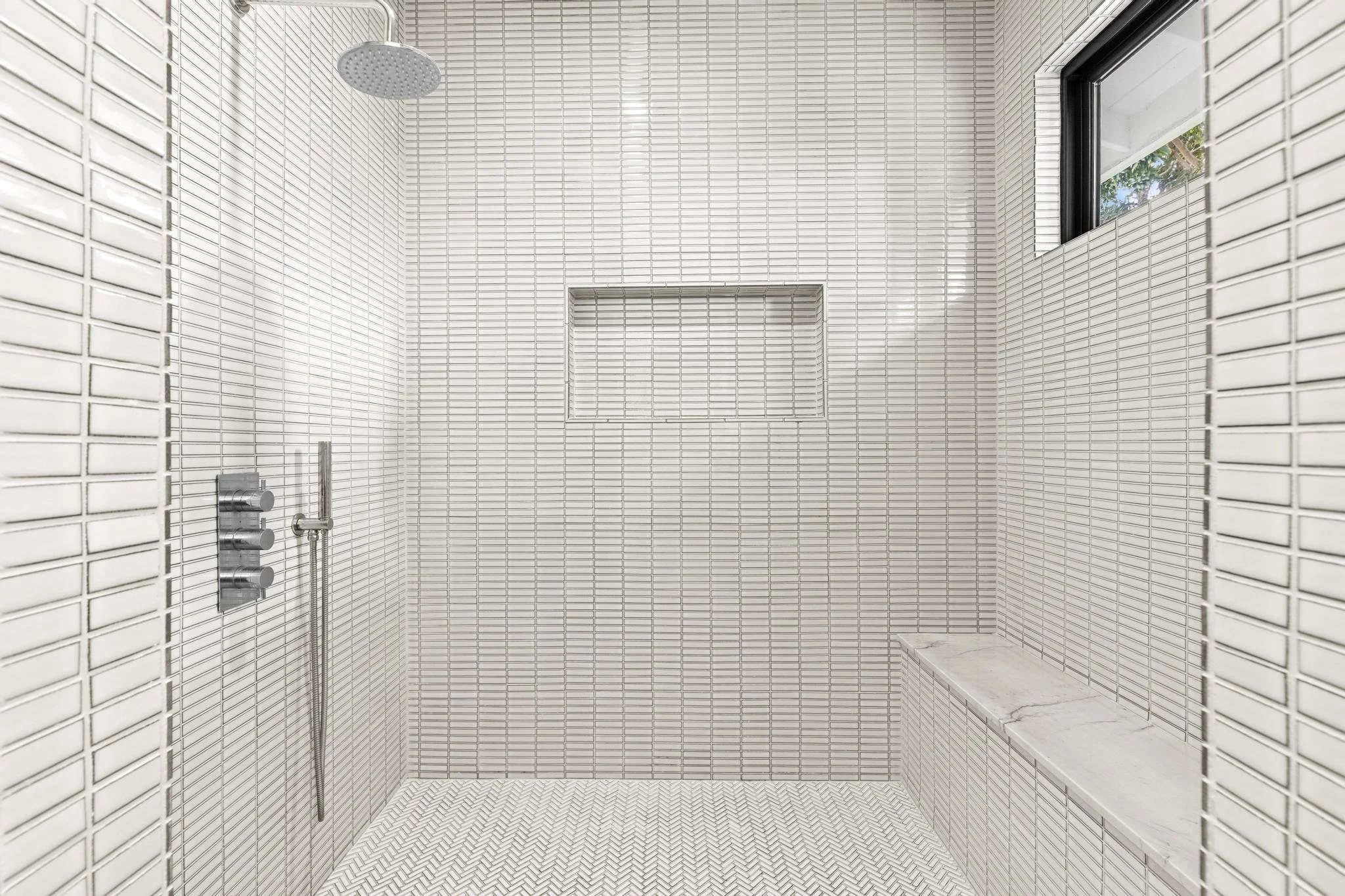
Soft natural light filters through carefully framed windows, illuminating a space that balances comfort with restraint, coupled with sliding doors leading straight to the lanai. The walk-in shower is clad in Savoy tile, color Cottonwood by Ann Sacks Tile, its subtle texture and refined patterning ground the space without ornament. Walnut cabinetry is echoed here with the slatted detail as seen in the kitchen. A private toilet closet offers discreet separation, while a walk-in closet provides generous, organized storage — each element designed for ease and calm. The suite feels deliberate, composed, and restorative: a pause from the rhythms of the home beyond.
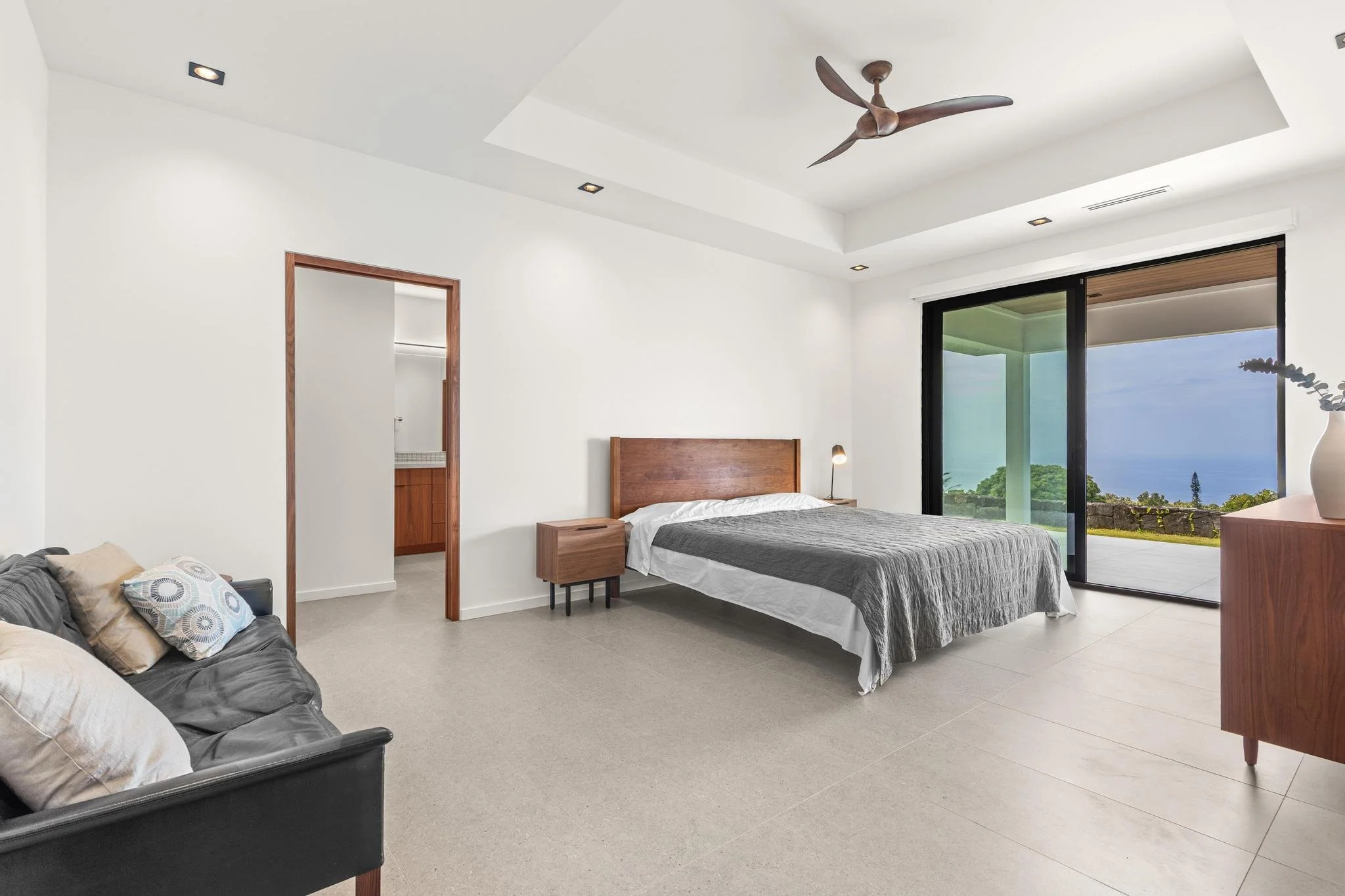
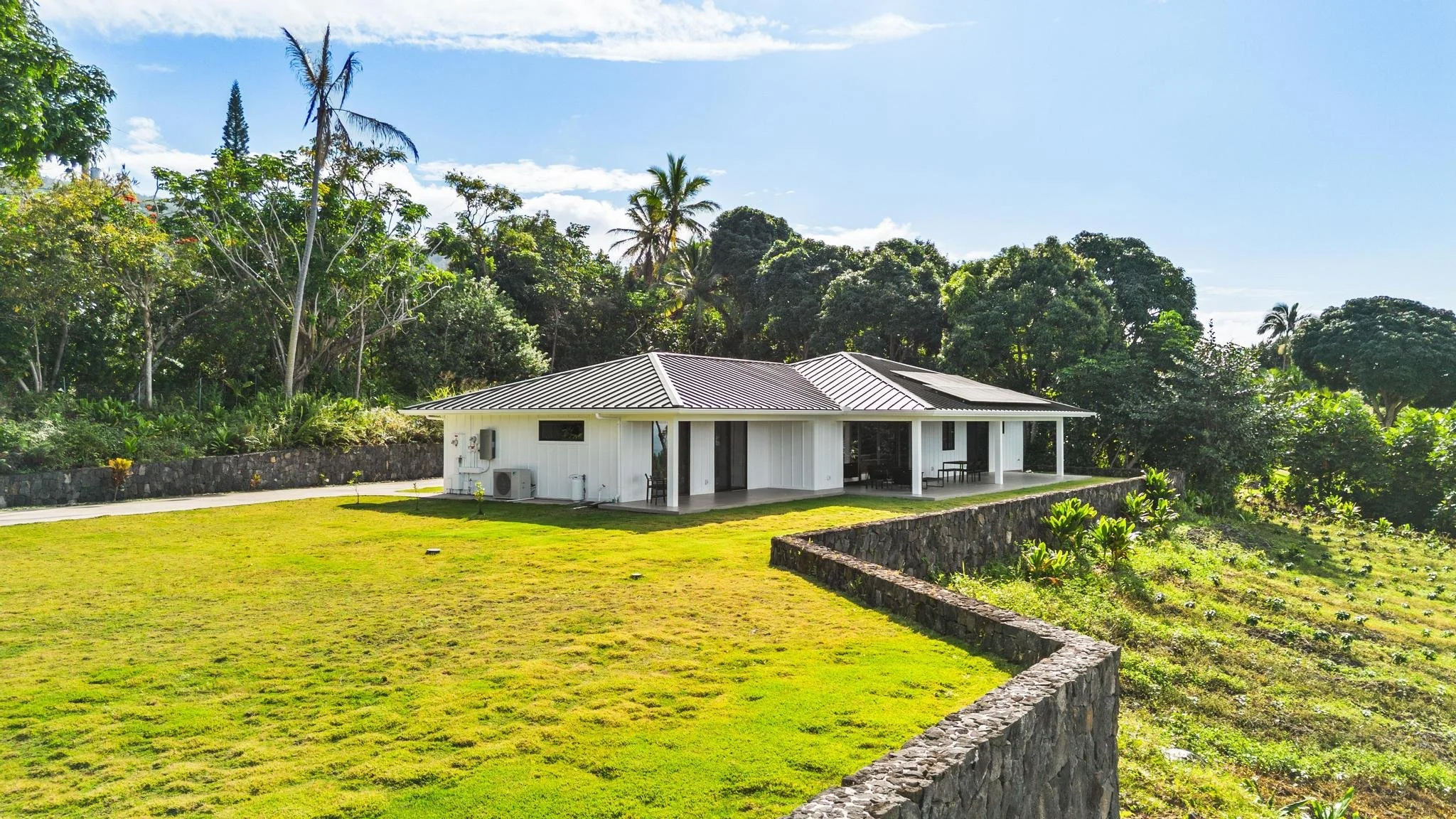
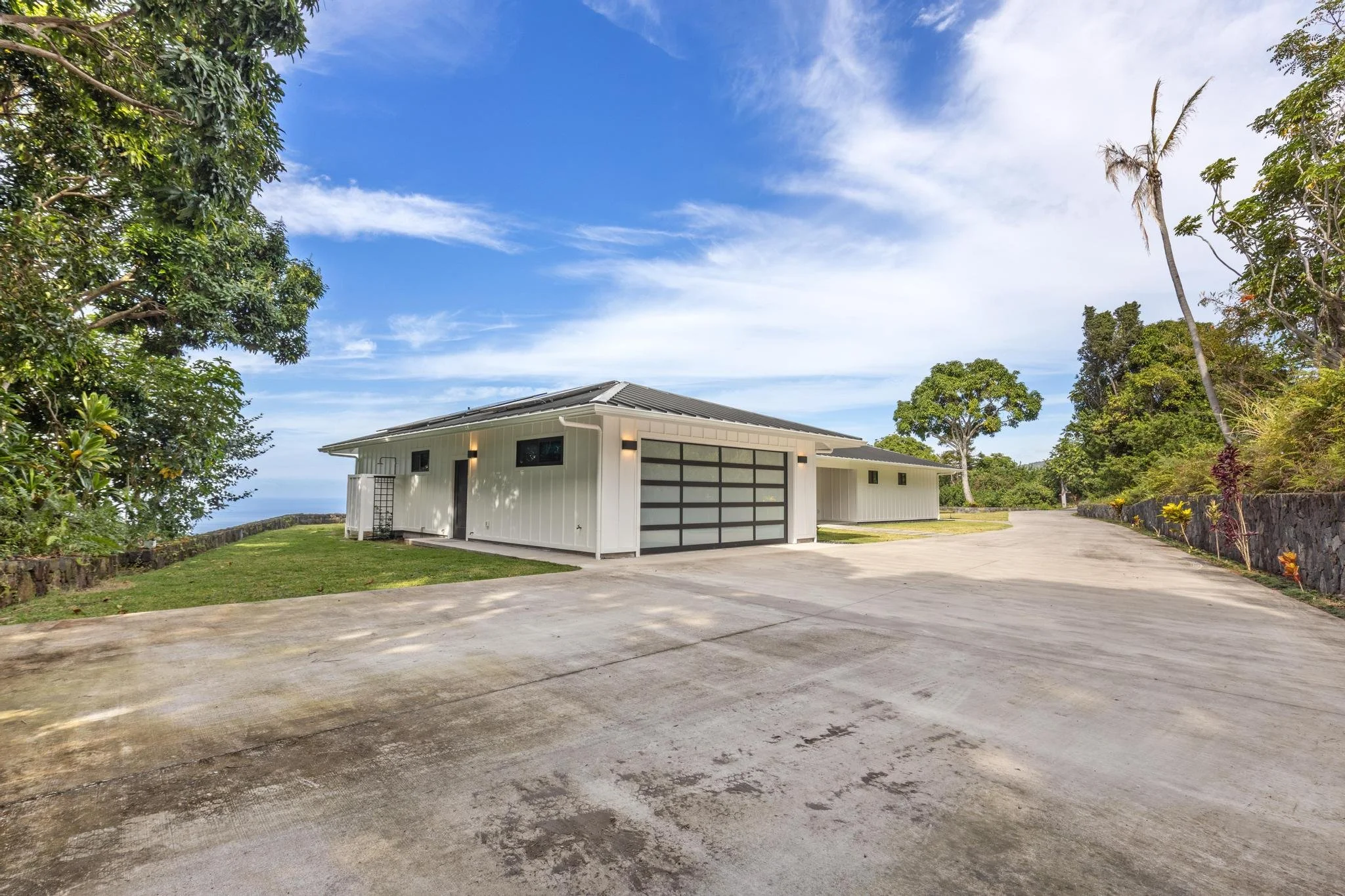
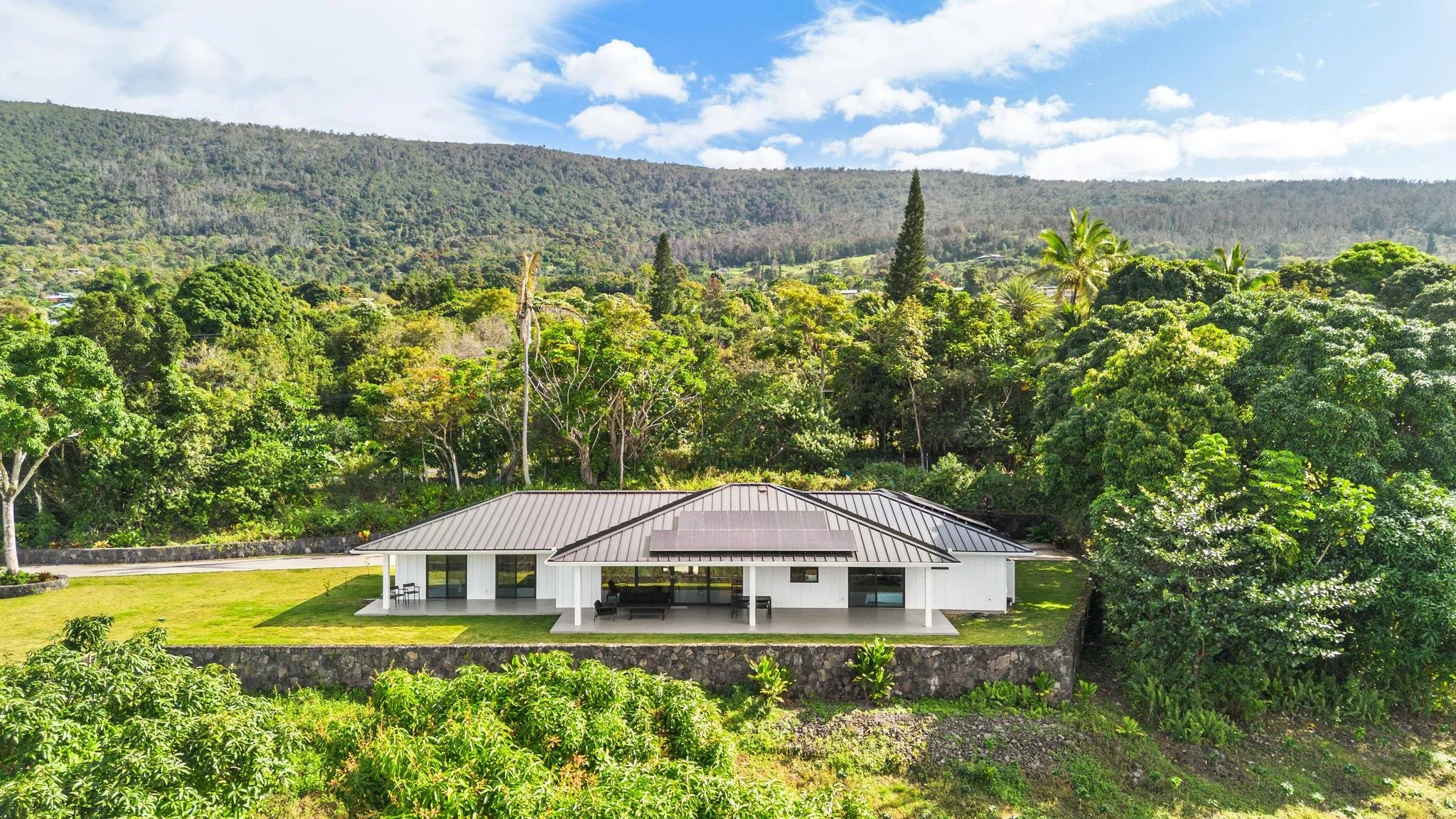
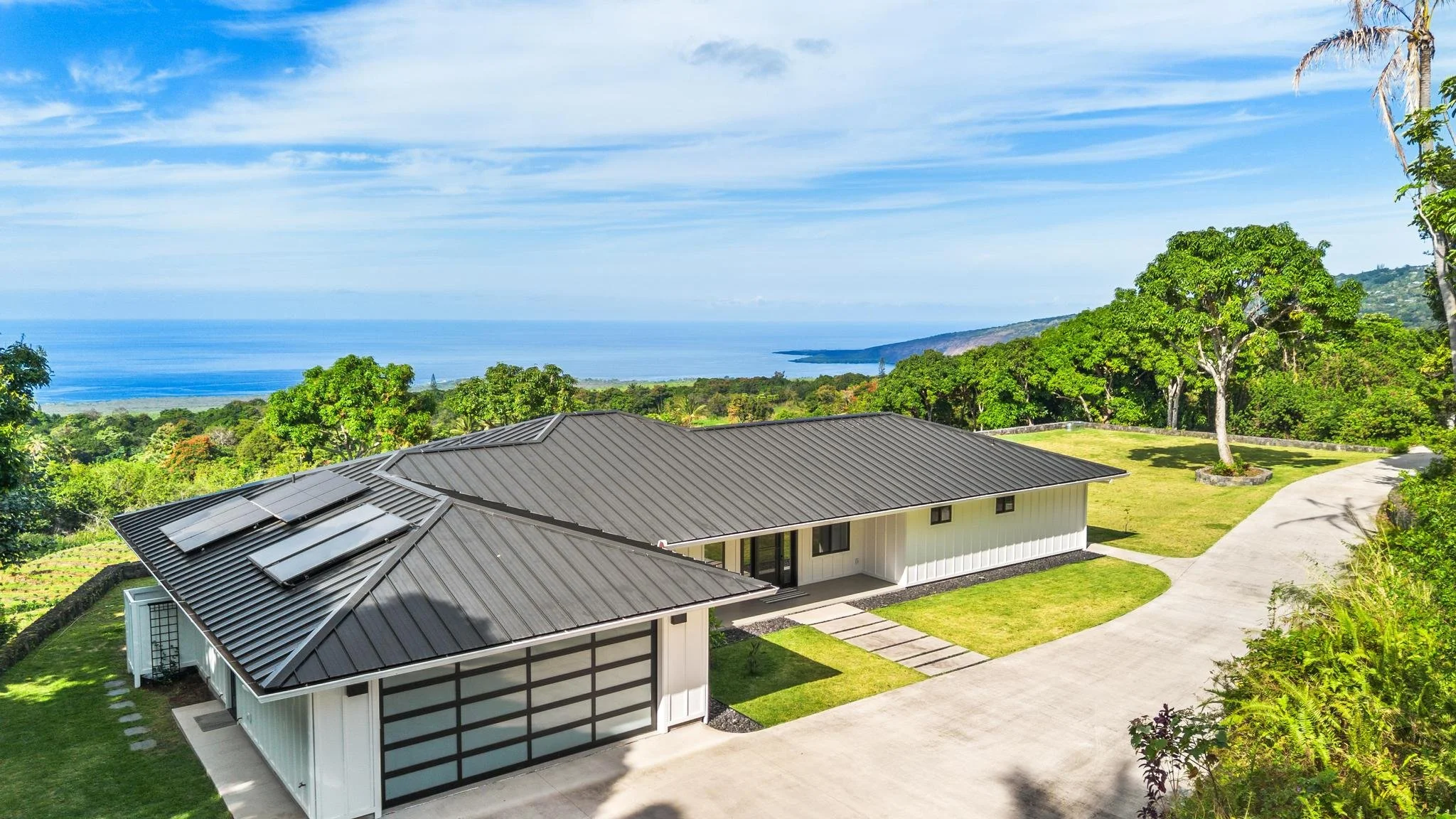
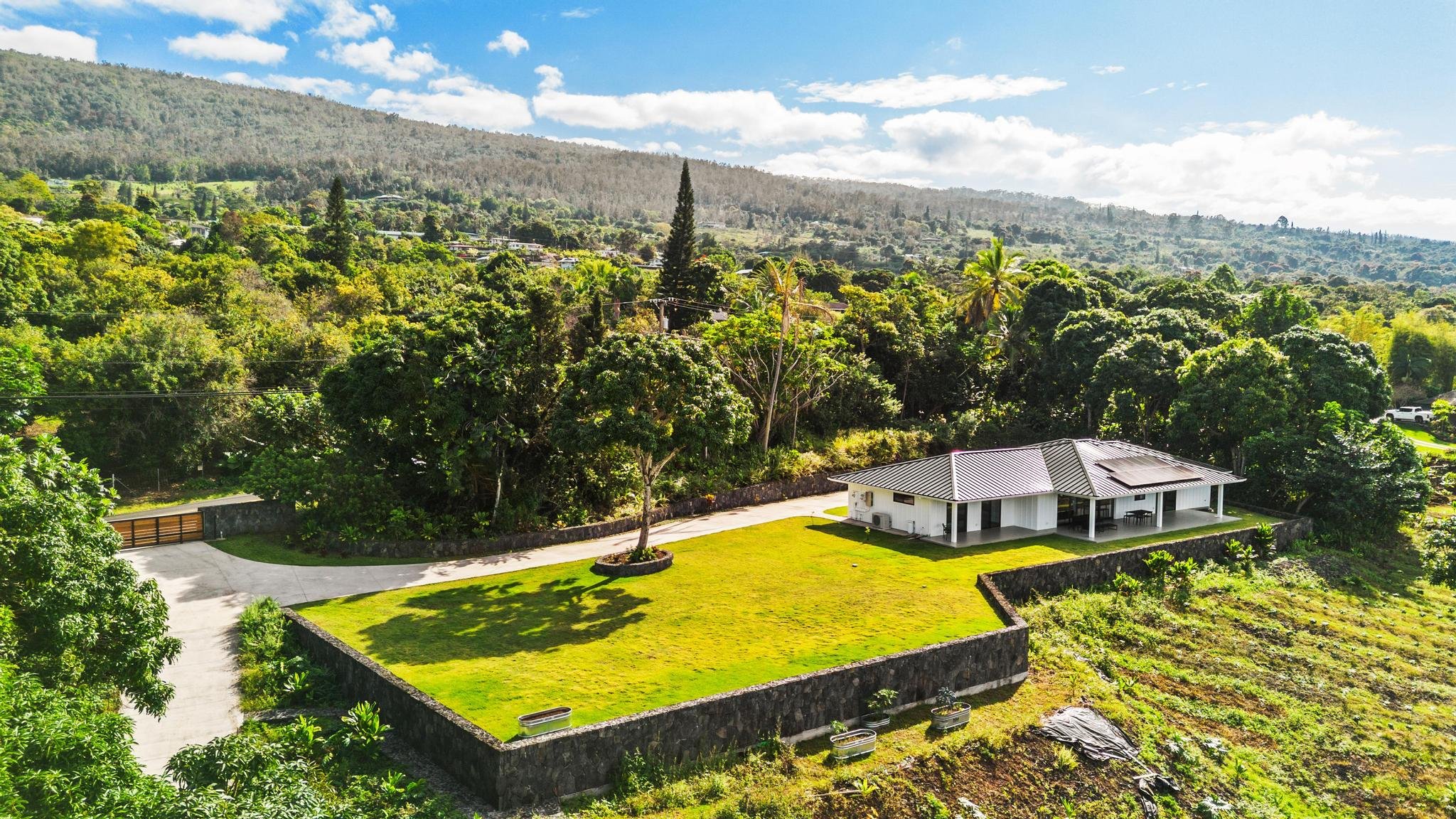
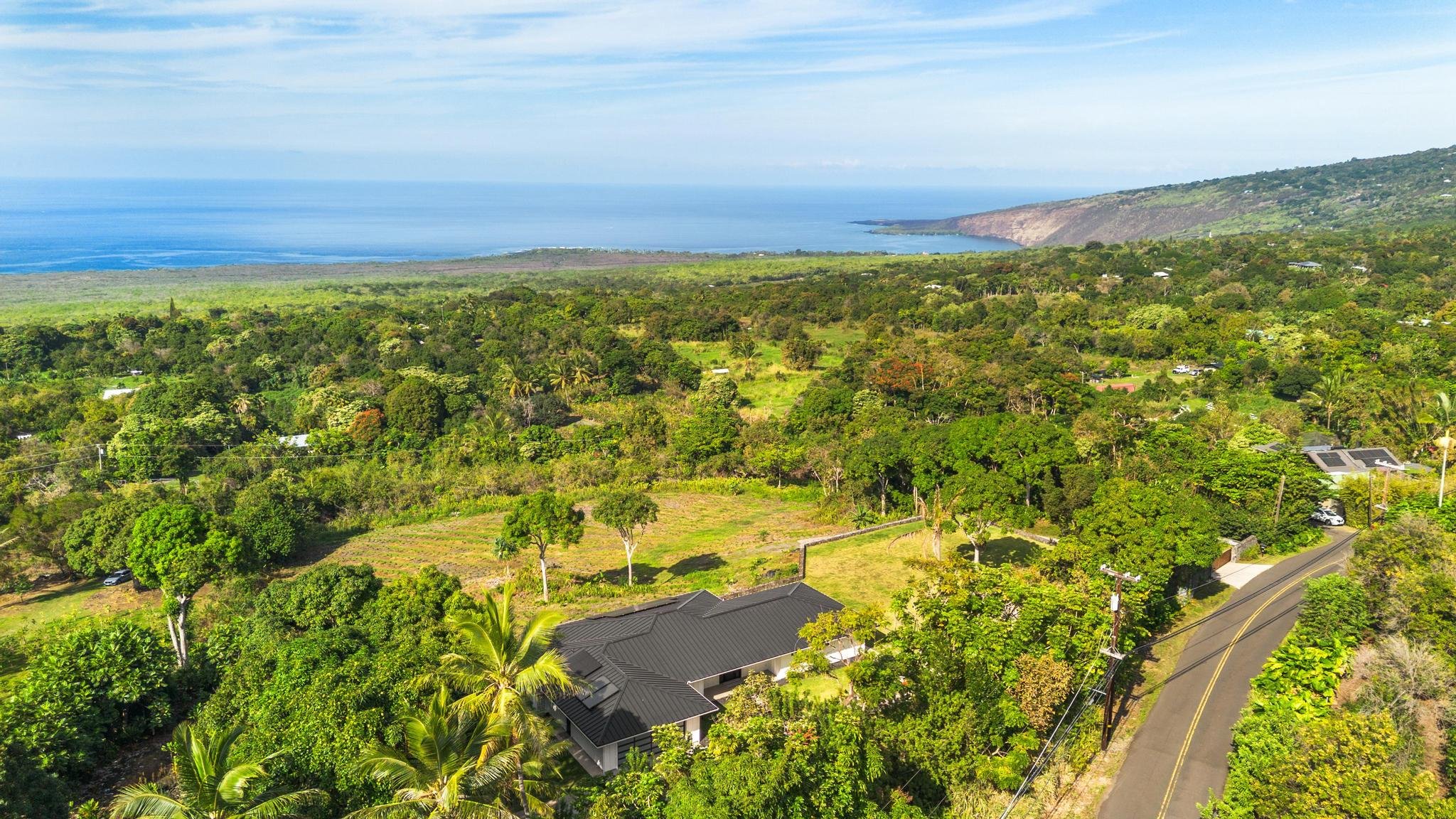
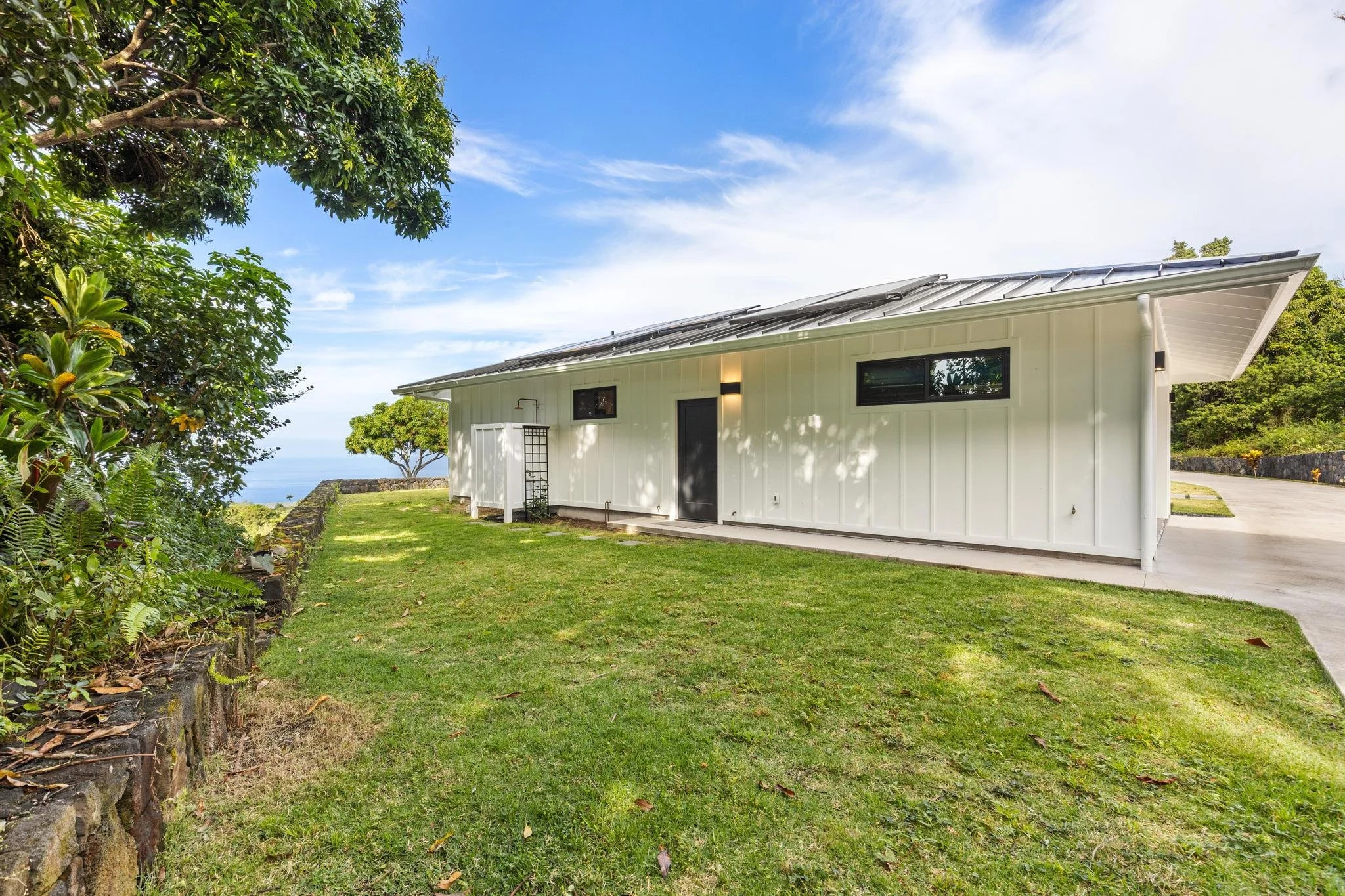
In Hawai‘i, design must breathe. Overhangs create shade. Windows invite cross-breezes. The home responds to climate as much as it responds to view.
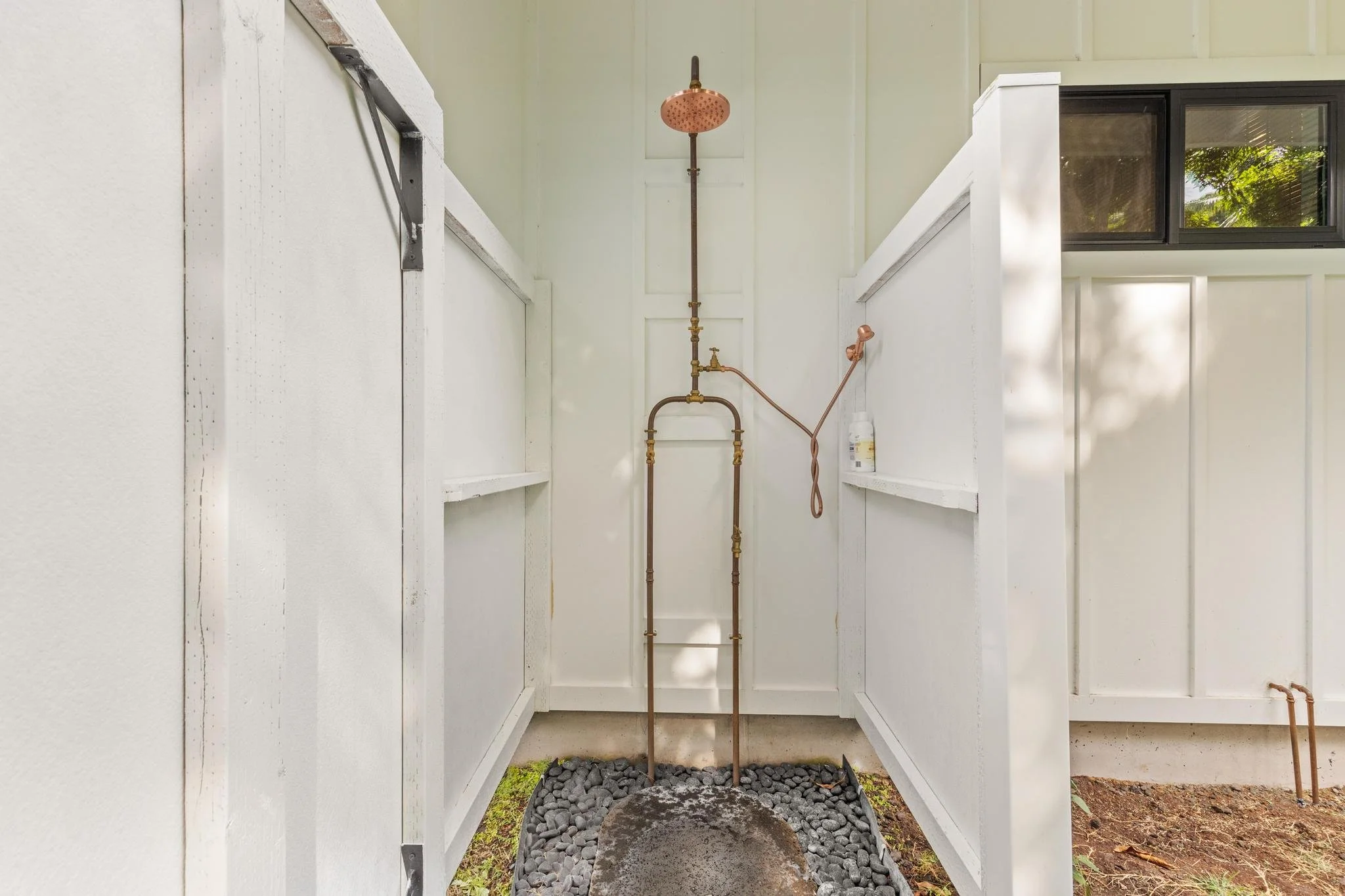
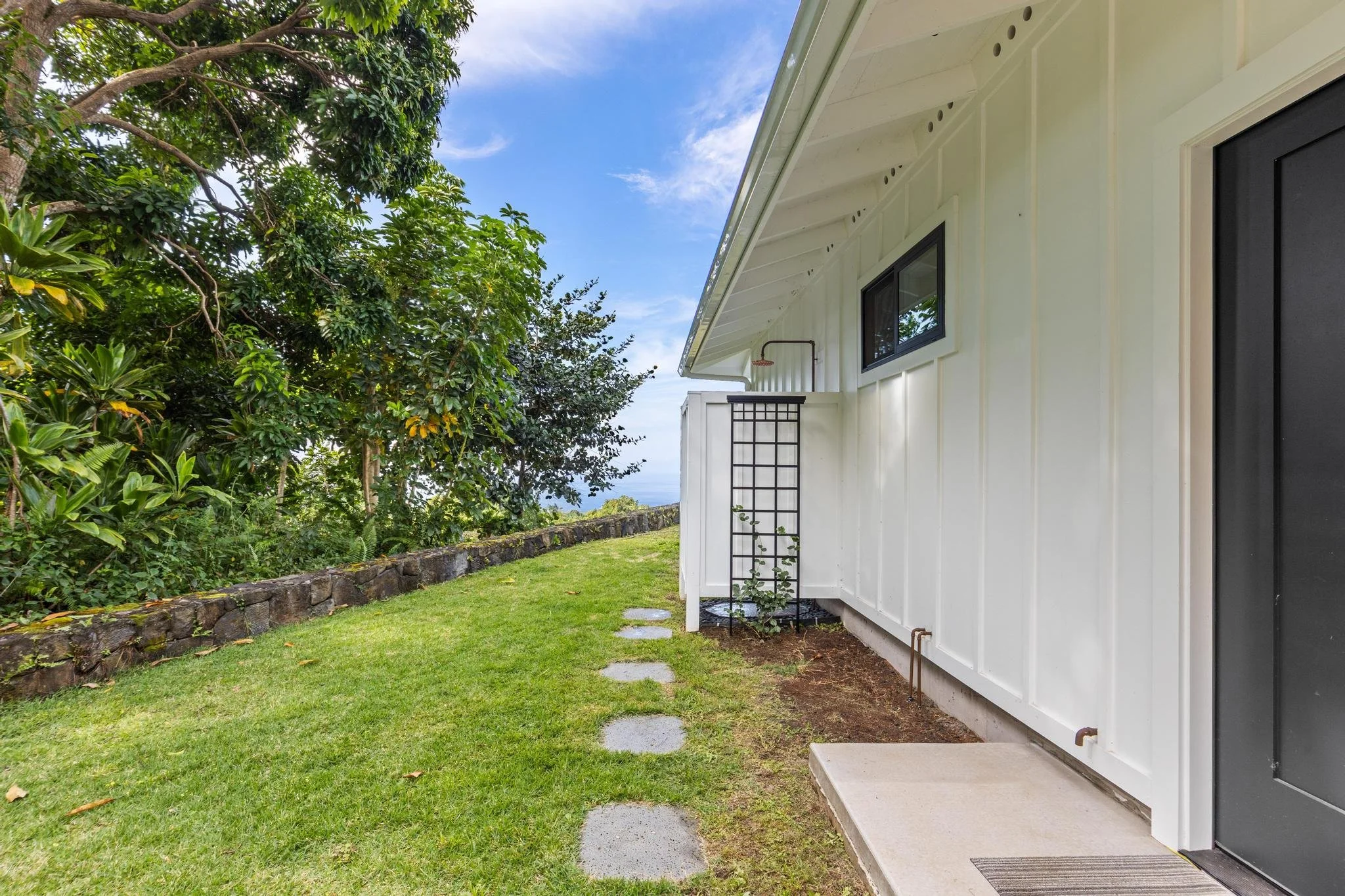
The outdoor shower is set discreetly off the primary suite — a private enclosure open to sky and trade winds. Exposed copper plumbing will patina over time, softening into the landscape, while a natural stone shower pan allows water to drain directly into the earth below. It is less a fixture and more an experience — salt air, warm water, volcanic ground underfoot.